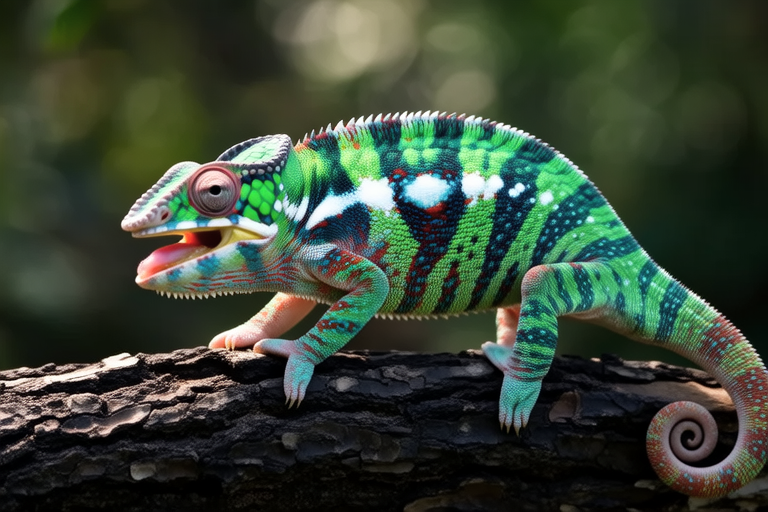
Unveiling the Mysteries: How Chameleons Really Change Color
Chameleons have long been the subject of fascination and intrigue, thanks to their remarkable ability to change color. These reptiles are often depicted in popular culture as masters of disguise, able to blend seamlessly into their surroundings. However, many of the commonly held beliefs about chameleons’ color-changing abilities are based on misconceptions. In reality, chameleons don’t change color simply to match their environment. Instead, they use this extraordinary skill for communication, temperature regulation, and more. This article will delve into the science behind chameleon color change, exploring the biological mechanisms that make it possible.
Common Misconceptions About Chameleon Color Change
One of the most widespread myths about chameleons is that they change color to match their surroundings. While it’s true that chameleons can alter their appearance to some extent, this isn’t always for the purpose of camouflage. Another misconception is that all chameleons can change color to the same degree. In fact, the range of colors and the speed at which they can change vary among different species. Additionally, people often believe that chameleons change color only when they’re stressed or scared. In reality, color changes can be triggered by a variety of factors, including mood, temperature, and social interactions.
The Biological Mechanisms Behind Chameleon Color Change
At the heart of chameleon color change are specialized cells called chromatophores and iridophores. Chromatophores are pigment-containing cells located in the skin. They come in various types, each responsible for producing different colors. The most common types are xanthophores (yellow), erythrophores (red), and melanophores (black or brown). When a chameleon wants to change its color, it can expand or contract these cells, altering the amount of pigment visible on the surface of its skin. For example, if a chameleon wants to appear darker, it might expand its melanophores, making the black or brown pigment more prominent.
Iridophores are another type of cell found in chameleon skin. Unlike chromatophores, which contain pigments, iridophores reflect light. They contain layers of guanine crystals that can be adjusted to reflect different wavelengths of light, creating a dazzling array of colors. By manipulating the spacing between these crystals, chameleons can produce shades of blue, green, and even white. The combination of chromatophores and iridophores allows chameleons to create complex patterns and vibrant hues that go far beyond simple camouflage.
Color Changes for Communication
One of the primary reasons chameleons change color is for communication. Male chameleons, in particular, use color changes to signal dominance, attract mates, and ward off rivals. During mating season, males may display bright, bold colors to attract females. If two males encounter each other, they may engage in a colorful display of aggression, where the brighter and more vibrant individual is usually perceived as dominant. Female chameleons also use color changes to communicate, but their signals tend to be less dramatic than those of males.
Chameleons can also use color changes to convey emotions. For instance, a stressed or frightened chameleon may turn dark, while a relaxed one might adopt a lighter, more subdued coloration. These color changes can help other chameleons gauge the emotional state of their peers, facilitating smoother social interactions within the group.
Temperature Regulation and Camouflage
While chameleons don’t primarily change color to match their surroundings, they do use color changes for camouflage in certain situations. For example, a chameleon resting on a leaf might adopt a greenish hue to blend in with its environment. This helps protect it from predators, especially when it’s not actively engaged in social or reproductive behaviors. However, camouflage is just one aspect of chameleon color change. Another important function is temperature regulation. By changing their color, chameleons can absorb or reflect sunlight, helping them maintain an optimal body temperature.
Dark colors absorb more heat, while light colors reflect it. Therefore, a chameleon might darken its skin to warm up on a cool morning or lighten it to cool down during the heat of the day. This ability to regulate body temperature through color changes is particularly useful for chameleons living in environments with fluctuating temperatures.
Different Species and Their Unique Color-Changing Abilities
There are over 200 species of chameleons, each with its own set of color-changing abilities. The panther chameleon, native to Madagascar, is renowned for its stunning color displays. Males can exhibit a wide range of colors, including vibrant blues, reds, and greens, while females tend to display more muted tones. The veiled chameleon, found in Yemen and Saudi Arabia, is known for its impressive ability to change from a dull brown to a bright green, yellow, or even blue. The Jackson’s chameleon, native to Kenya and Tanzania, has three horns on its head and can change color rapidly when threatened or excited.
Another interesting species is the Parson’s chameleon, one of the largest chameleons in the world. It can change color very quickly, often displaying a mix of greens, blues, and yellows. The Indian flap-footed chameleon, on the other hand, has a more limited color palette, typically ranging from brown to green. Despite its smaller range of colors, it still uses these changes effectively for communication and temperature regulation.
Recent Research Findings and Ongoing Studies
Scientists continue to explore the intricacies of chameleon color change, uncovering new insights into the underlying mechanisms. Recent research has focused on the role of neural pathways in controlling color changes. Studies have shown that chameleons have specific brain regions dedicated to regulating the expansion and contraction of chromatophores and iridophores. Understanding these neural pathways could lead to breakthroughs in fields such as bioengineering and materials science.
Ongoing studies are also investigating the potential applications of chameleon-inspired technology. Researchers are working on developing materials that mimic the reflective properties of iridophores, which could be used in optical devices, sensors, and even clothing. These materials could offer enhanced durability and performance compared to traditional alternatives. Additionally, scientists are exploring the use of chameleon-like color-changing systems in medical imaging and diagnostics, where they could provide more accurate and detailed information about internal structures.
In conclusion, chameleons’ color-changing abilities are a testament to the wonders of evolution and adaptation. By understanding the biological mechanisms behind these transformations, we gain valuable insights into the complexity of life and the ingenuity of nature. From communication and camouflage to temperature regulation, chameleons use their vibrant colors to thrive in diverse environments. As research continues to unravel the mysteries of chameleon color change, we can expect even more exciting discoveries in the years to come.
