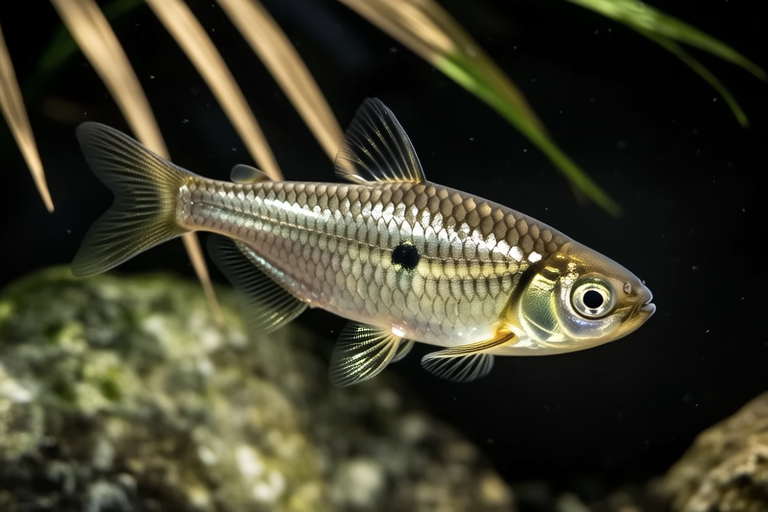
The Astonishing Intelligence of Arowanas: Unveiling Their Unique Behaviors
In the vast and diverse world of aquatic life, few species capture the imagination quite like the arowana. These ancient, prehistoric-looking fish are not only rare but also possess an astonishing level of intelligence that sets them apart from many other freshwater species. Found primarily in the rivers and swamps of Southeast Asia, South America, and Africa, arowanas have long been revered for their beauty and unique behaviors. This article delves into the remarkable cognitive abilities of arowanas, exploring their problem-solving skills, memory capabilities, and social interactions. We will also discuss their hunting techniques, cultural significance, and the challenges they face in the modern world.
Rarity and Intelligence: An Introduction
Arowanas are among the most sought-after aquarium fish due to their striking appearance and enigmatic behavior. Their elongated bodies, adorned with shimmering scales, and powerful jaws make them stand out in any setting. However, what truly distinguishes arowanas is their intelligence. Unlike many fish, which rely solely on instinct, arowanas demonstrate complex behaviors that suggest a high level of cognitive function. This intelligence has made them a subject of fascination for scientists and hobbyists alike.
Cognitive Abilities: Problem-Solving Skills and Memory Capabilities
One of the most notable aspects of arowana intelligence is their problem-solving skills. In controlled experiments, arowanas have demonstrated the ability to learn and adapt to new situations quickly. For instance, when presented with a novel feeding method, such as food hidden behind transparent barriers, arowanas were able to figure out the correct approach after a few attempts. This skill is indicative of their capacity for learning and memory retention, which is crucial for survival in their natural habitat.
Memory is another key component of arowana intelligence. These fish are known to remember the location of food sources and return to them repeatedly. This ability is particularly useful in environments where food can be scarce, and remembering where and when food was last available can mean the difference between survival and starvation. Additionally, arowanas have shown the capacity to recognize individual humans, further highlighting their advanced cognitive abilities.
Social Behaviors and Interactions
Arowanas are highly social creatures, often living in groups or schools. Within these groups, they exhibit complex social behaviors that include cooperation and competition. They are known to work together to protect their territory and hunt for food, demonstrating a level of coordination that is unusual in fish. However, there is also competition for dominance within the group, with stronger individuals often asserting leadership roles.
These social dynamics are not just for show; they play a crucial role in the survival and success of the species. By working together, arowanas can better defend against predators and find food more efficiently. This cooperative behavior is a testament to their intelligence and adaptability.
Hunting Techniques and Environmental Interaction
Arowanas are formidable hunters, equipped with sharp teeth and powerful bodies that allow them to catch prey both above and below the water’s surface. One of their most impressive hunting techniques is their ability to leap out of the water to catch birds, insects, and other aerial prey. This behavior, known as “surface feeding,” requires precise timing and coordination, showcasing the fish’s agility and intelligence.
In addition to their hunting prowess, arowanas are also adept at interacting with their environment. They are known to use objects in their surroundings to aid in hunting, such as knocking down branches or disturbing vegetation to flush out hiding prey. This tool use is a rare trait in the animal kingdom and further underscores the arowana’s cognitive abilities.
Myths and Cultural Significance
Arowanas hold significant cultural importance in many parts of the world, particularly in Southeast Asia. In Chinese culture, the arowana is considered a symbol of good luck and prosperity. It is believed that keeping an arowana in one’s home can bring wealth and fortune, leading to its widespread popularity in the ornamental fish trade.
In addition to their symbolic value, arowanas are also steeped in mythology. In some cultures, they are believed to be the guardians of underwater treasures, adding to their mystique and allure. These myths and legends have contributed to the fascination with arowanas and have helped to preserve their image as powerful and intelligent creatures.
Future Research Directions and Conservation Efforts
Despite their intelligence and cultural significance, arowanas face numerous challenges in the modern world. Habitat destruction, pollution, and overfishing have all taken a toll on their populations. As a result, conservation efforts are essential to ensure the survival of these remarkable fish.
Future research should focus on understanding the full extent of arowana intelligence and how it contributes to their survival in the wild. Studies could explore the impact of environmental changes on their behavior and the effectiveness of different conservation strategies. Additionally, efforts to reduce the demand for arowanas in the ornamental fish trade could help alleviate pressure on wild populations.
Conservation initiatives should prioritize the protection of arowana habitats and the establishment of protected areas where these fish can thrive. Education campaigns aimed at raising awareness about the importance of arowanas and the threats they face could also play a vital role in their preservation.
In conclusion, the arowana is a fascinating and intelligent species that continues to captivate scientists and enthusiasts alike. Their problem-solving skills, memory capabilities, and social behaviors are just a few examples of the remarkable cognitive abilities that set them apart. As we continue to learn more about these ancient fish, it is our responsibility to ensure that they are protected for generations to come.
