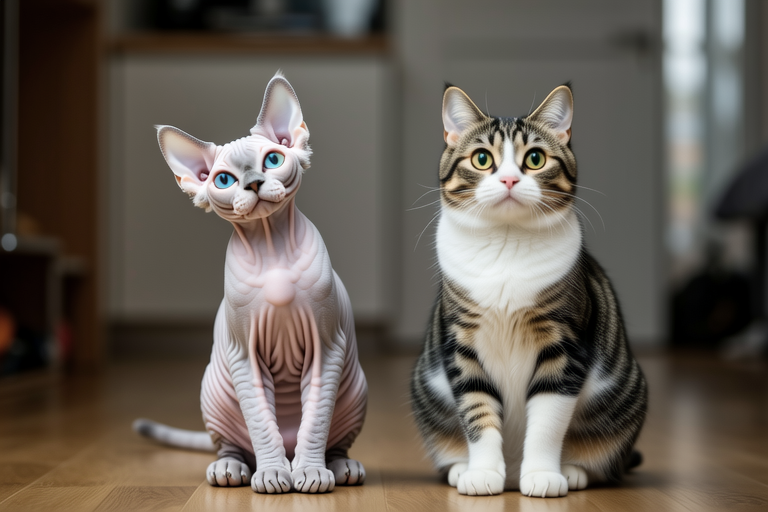
Devon Rex Cats Compared to Other Popular Cat Breeds
Welcome to our comprehensive guide that will help you understand the unique characteristics of Devon Rex cats and how they compare with other popular cat breeds. We’ll delve into their physical traits, personalities, grooming needs, health considerations, and compatibility with various living environments and lifestyles. By the end of this article, you’ll have a clearer picture of which breed might be the best fit for your family.
Physical Traits
Devon Rex
The Devon Rex is known for its large ears, prominent cheekbones, and most notably, its curly, short coat. This breed’s fur is unique, often described as resembling velvet or suede, and it comes in a variety of colors. They have a slender body with long legs, giving them a distinctive appearance. Their small size makes them ideal for homes where space is limited.
British Shorthair
British Shorthairs are robust, muscular cats with a thick, plush coat that can come in various colors, including the iconic blue. They have round faces, wide-set eyes, and compact bodies. Unlike the Devon Rex, British Shorthairs are medium to large-sized cats, making them perfect for families looking for a sturdy companion.
Maine Coon
Maine Coons are one of the largest domestic cat breeds, with males weighing up to 18 pounds. They have a long, bushy tail, tufted ears, and a thick, water-resistant coat designed to withstand cold weather. Their large paws and bushy tails make them look like mini lions, and their gentle demeanor complements their striking appearance.
Sphynx
Sphynx cats are hairless, which sets them apart from other breeds. However, they still have a soft, fine layer of downy fuzz. Their wrinkled skin, large ears, and almond-shaped eyes give them an almost alien-like appearance. Sphynx cats are medium-sized, and their lack of fur requires special care to keep their skin healthy.
Personality
Devon Rex
Devon Rexes are known for their playful and mischievous nature. They love to explore and can often be found climbing on furniture or engaging in games. These cats are highly intelligent and can even learn tricks. They thrive on attention and companionship, making them great pets for people who enjoy interactive play.
British Shorthair
British Shorthairs are calm and affectionate, often described as having a laid-back personality. They enjoy being around people but are not overly demanding of attention. These cats are good with children and other pets, making them excellent choices for families. Their gentle nature also makes them suitable for apartment living.
Maine Coon
Maine Coons are social, friendly, and incredibly intelligent. They enjoy human interaction and are often referred to as “dog-like” because of their loyalty and affection. Maine Coons are great with children and other animals, and they adapt well to different environments. Despite their large size, they are gentle and patient, making them perfect companions for families.
Sphynx
Sphynx cats are known for their extroverted and curious personalities. They are very affectionate and seek constant attention, often following their owners around the house. Sphynx cats are highly adaptable and can adjust to various living situations, but they require more time and attention than some other breeds.
Grooming Needs
Devon Rex
Despite their curly fur, Devon Rexes require minimal grooming. Regular brushing with a soft brush can help remove loose hairs and prevent matting. However, they shed less than many other breeds, so you won’t need to worry about excessive shedding.
British Shorthair
British Shorthairs have a dense, plush coat that requires regular brushing to keep it in top condition. Weekly brushing helps remove dead hair and prevents matting. Bathing may be necessary occasionally, especially if your cat has been rolling in something unsavory.
Maine Coon
Maine Coons have a thick, water-resistant coat that requires weekly brushing to prevent matting and tangling. During shedding seasons, more frequent brushing may be necessary. Bathing should be done sparingly, as over-bathing can strip the coat of its natural oils.
Sphynx
While Sphynx cats don’t have fur, they still require regular grooming to maintain their skin health. Dust and debris can accumulate on their skin, so weekly baths are recommended. Additionally, moisturizing their skin with special products can help prevent dryness and keep them comfortable.
Health Considerations
Devon Rex
Devon Rexes are generally healthy, but they are prone to certain genetic conditions. Hypertrophic cardiomyopathy (HCM), a heart disease, is common in this breed. Regular veterinary check-ups and early detection can help manage this condition. Additionally, Devon Rexes may be susceptible to patellar luxation, a joint disorder.
British Shorthair
British Shorthairs are generally healthy, but they can suffer from obesity if not monitored. Providing a balanced diet and regular exercise can help maintain their weight. They are also prone to polycystic kidney disease (PKD), a condition that can lead to kidney failure. Early detection and management are crucial for extending their lifespan.
Maine Coon
Maine Coons are generally healthy, but they can develop hip dysplasia and hypertrophic cardiomyopathy (HCM). Regular vet visits and a healthy lifestyle can help prevent these issues. Maine Coons are also prone to obesity, so it’s important to monitor their diet and activity levels.
Sphynx
Sphynx cats are prone to dermatological issues due to their lack of fur. Skin infections, allergies, and sunburns are common concerns. Regular bathing and moisturizing can help prevent these issues. Additionally, Sphynx cats are at risk for respiratory problems, so it’s essential to keep their environment clean and free of allergens.
Compatibility with Different Living Environments and Lifestyles
Devon Rex
Devon Rexes are highly adaptable and can thrive in various living environments. Their playful and energetic nature makes them great companions for active households. However, they may not be the best choice for those who work long hours, as they crave attention and companionship. For individuals who are home most of the day and enjoy interactive play, Devon Rexes are an excellent choice.
British Shorthair
British Shorthairs are well-suited for apartment living due to their calm and laid-back personality. They are content with moderate amounts of attention and are happy to nap in a cozy spot. British Shorthairs are also great for families with children and other pets, as they are gentle and patient.
Maine Coon
Maine Coons are adaptable to various environments but prefer cooler temperatures due to their thick coats. They are great companions for families with children and other pets, thanks to their friendly and gentle nature. Maine Coons are also suitable for active households, as they enjoy playing and exploring.
Sphynx
Sphynx cats are highly adaptable and can adjust to different living situations. However, they require more attention and interaction than some other breeds, making them ideal for individuals who are home most of the day. Sphynx cats are also great for families with children and other pets, as they are affectionate and social.
Pros and Cons of Each Breed
Devon Rex
- Pros:
- Playful and mischievous nature
- High intelligence and ability to learn tricks
- Minimal grooming requirements
- Adaptable to various living environments
- Cons:
- Prone to genetic conditions such as hypertrophic cardiomyopathy and patellar luxation
- May not be the best choice for those who work long hours
British Shorthair
- Pros:
- Calm and affectionate personality
- Great for families with children and other pets
- Adaptable to apartment living
- Generally healthy, with no specific breed-related health issues
- Cons:
- Prone to obesity if not monitored
- Predisposed to polycystic kidney disease (PKD)
Maine Coon
- Pros:
- Social and friendly nature
- Great with children and other pets
- Adaptable to various environments
- High intelligence and problem-solving abilities
- Cons:
- Large size may be overwhelming for some households
- Prone to hip dysplasia and hypertrophic cardiomyopathy (HCM)
- Predisposed to obesity
Sphynx
- Pros:
- Extroverted and curious personality
- Highly adaptable to various living situations
- Great for individuals who are home most of the day
- Excellent companions for families with children and other pets
- Cons:
- Requires more attention and interaction than some other breeds
- Prone to dermatological issues and respiratory problems
- Higher grooming needs compared to furred breeds
Conclusion
Choosing the right cat breed depends on your lifestyle, preferences, and living situation. Devon Rexes are playful and mischievous, making them great companions for active households. British Shorthairs are calm and affectionate, ideal for families with children and other pets. Maine Coons are social and friendly, perfect for families looking for a loyal and gentle companion. Sphynx cats are extroverted and curious, suitable for individuals who are home most of the day and enjoy constant companionship.
By understanding the unique characteristics of each breed, you can make an informed decision about which cat will bring joy and companionship to your home. Remember to consider factors such as grooming needs, health considerations, and compatibility with your living environment when choosing a cat. With proper care and attention, any of these breeds can become a cherished member of your family.
