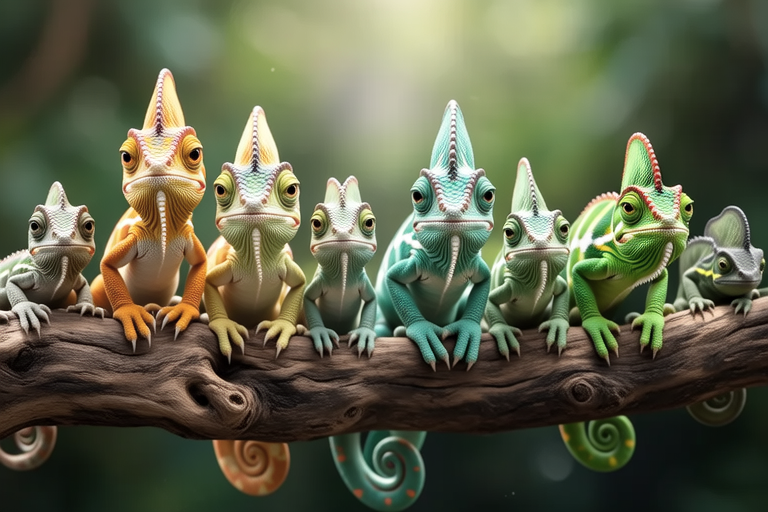
Top 10 Chameleon Species Every Pet Lover Should Know
Chameleons are fascinating creatures that have captivated the hearts of many pet enthusiasts with their vibrant colors and unique abilities. These reptiles are known for their ability to change color, which they use for communication, temperature regulation, and camouflage. This article will introduce you to the top 10 chameleon species that every pet lover should know, providing valuable insights into their unique characteristics, care requirements, and ideal living conditions.
1. Panther Chameleon (Furcifer pardalis)
The Panther Chameleon is one of the most popular and colorful chameleon species, native to Madagascar. Males exhibit stunning coloration, ranging from bright blues and reds to greens and oranges, while females are generally more subdued. Panther Chameleons are arboreal, meaning they spend most of their time in trees. They are territorial and can be aggressive towards other chameleons, especially males.
These chameleons require spacious enclosures, ideally 4 feet tall by 2 feet wide, with plenty of branches and plants for climbing and hiding. A UVB light source is essential for calcium metabolism, and a heat lamp is necessary to maintain the appropriate temperature gradient. Panther Chameleons need a humidity level between 60% and 80%, achieved through misting or a humidifier.
Dietary needs include a variety of insects such as crickets, mealworms, and waxworms. It’s crucial to dust the insects with a calcium supplement to prevent metabolic bone disease. Panther Chameleons can live up to 7 years with proper care.
2. Veiled Chameleon (Chamaeleo calyptratus)
The Veiled Chameleon is another popular choice for chameleon enthusiasts. Native to Yemen and Saudi Arabia, this species is known for its distinctive casque, a helmet-like structure on its head. Male Veiled Chameleons display striking colors, often featuring shades of green, yellow, and blue, while females tend to be more muted.
Veiled Chameleons thrive in large enclosures, approximately 3 feet tall by 2 feet wide, with ample space for climbing and basking. They require a UVB light source, a heat lamp, and a consistent temperature range of 75°F to 90°F (24°C to 32°C). Humidity levels should be maintained between 40% and 60%.
A varied diet consisting of crickets, dubia roaches, and silkworms is recommended. Dusting the food with calcium and vitamin D3 supplements is essential. With proper care, Veiled Chameleons can live up to 7 years.
3. Jackson’s Chameleon (Trioceros jacksonii)
Jackson’s Chameleon, native to Kenya and Tanzania, is known for its tricorn-shaped head and long, prehensile tail. Males typically display bright green hues with hints of blue, whereas females are usually brown or green. These chameleons are primarily herbivorous, feeding on leaves, flowers, and fruits in the wild.
Jackson’s Chameleons prefer larger enclosures, around 3 feet tall by 2 feet wide, with plenty of live plants for climbing and foraging. They require a UVB light source and a temperature range of 70°F to 80°F (21°C to 27°C). Humidity levels should be kept between 50% and 70%. Feeding them a mix of leafy greens, fruits, and insects ensures a balanced diet. With suitable care, these chameleons can live up to 7 years.
4. Parson’s Chameleon (Calumma parsonii)
The Parson’s Chameleon is one of the largest chameleon species, reaching lengths of up to 24 inches. Native to Madagascar, this species is known for its striking appearance, featuring a long snout and prominent eyes. Males and females both display vibrant colors, but males are generally more brightly colored.
Parson’s Chameleons require extensive enclosures, at least 4 feet tall by 3 feet wide, with plenty of vertical space for climbing. They need a UVB light source, a heat lamp, and a temperature range of 75°F to 90°F (24°C to 32°C). Humidity levels should be maintained between 60% and 80%. Their diet consists of a variety of insects, supplemented with calcium and vitamin D3. Properly cared for, Parson’s Chameleons can live up to 10 years.
5. Fischer’s Chameleon (Kinyongia fischeri)
Fischer’s Chameleon, native to eastern Africa, is a smaller species, typically reaching lengths of 6 to 8 inches. This species is known for its slender build and vibrant colors, including shades of green, yellow, and blue. Fischer’s Chameleons are primarily insectivorous.
These chameleons require enclosures of at least 2 feet tall by 1.5 feet wide, with plenty of branches and plants for climbing. They need a UVB light source, a heat lamp, and a temperature range of 70°F to 85°F (21°C to 29°C). Humidity levels should be kept between 50% and 70%. A varied diet of crickets, mealworms, and waxworms, dusted with calcium and vitamin D3 supplements, is recommended. With proper care, Fischer’s Chameleons can live up to 5 years.
6. Oustalet’s Chameleon (Furcifer oustaleti)
Oustalet’s Chameleon, native to Madagascar, is one of the largest chameleon species, reaching lengths of up to 27 inches. This species is known for its impressive size and vibrant colors, including shades of green, blue, and orange. Oustalet’s Chameleons are primarily insectivorous.
These chameleons require large enclosures, at least 4 feet tall by 3 feet wide, with plenty of vertical space for climbing. They need a UVB light source, a heat lamp, and a temperature range of 75°F to 90°F (24°C to 32°C). Humidity levels should be maintained between 60% and 80%. A varied diet of crickets, mealworms, and waxworms, dusted with calcium and vitamin D3 supplements, is recommended. Properly cared for, Oustalet’s Chameleons can live up to 10 years.
7. Flap-necked Chameleon (Chamaeleo dilepis)
The Flap-necked Chameleon, native to southern Africa, is known for its distinctive flap-like structures behind its eyes. Males and females both display vibrant colors, including shades of green, yellow, and blue. Flap-necked Chameleons are primarily insectivorous.
These chameleons require enclosures of at least 2 feet tall by 1.5 feet wide, with plenty of branches and plants for climbing. They need a UVB light source, a heat lamp, and a temperature range of 70°F to 85°F (21°C to 29°C). Humidity levels should be kept between 50% and 70%. A varied diet of crickets, mealworms, and waxworms, dusted with calcium and vitamin D3 supplements, is recommended. With proper care, Flap-necked Chameleons can live up to 5 years.
8. Common Dwarf Chameleon (Bradypodion pumilum)
The Common Dwarf Chameleon, native to southern Africa, is one of the smallest chameleon species, typically reaching lengths of 4 to 5 inches. This species is known for its small size and vibrant colors, including shades of green, yellow, and blue. Common Dwarf Chameleons are primarily insectivorous.
These chameleons require enclosures of at least 1.5 feet tall by 1 foot wide, with plenty of branches and plants for climbing. They need a UVB light source, a heat lamp, and a temperature range of 70°F to 85°F (21°C to 29°C). Humidity levels should be kept between 50% and 70%. A varied diet of crickets, mealworms, and waxworms, dusted with calcium and vitamin D3 supplements, is recommended. With proper care, Common Dwarf Chameleons can live up to 5 years.
9. Four-horned Chameleon (Trioceros quadricornis)
The Four-horned Chameleon, native to eastern Africa, is known for its four horn-like structures above its eyes. Males and females both display vibrant colors, including shades of green, yellow, and blue. Four-horned Chameleons are primarily insectivorous.
These chameleons require enclosures of at least 2 feet tall by 1.5 feet wide, with plenty of branches and plants for climbing. They need a UVB light source, a heat lamp, and a temperature range of 70°F to 85°F (21°C to 29°C). Humidity levels should be kept between 50% and 70%. A varied diet of crickets, mealworms, and waxworms, dusted with calcium and vitamin D3 supplements, is recommended. With proper care, Four-horned Chameleons can live up to 5 years.
10. Pygmy Chameleon (Rieppeleon brevicaudatus)
The Pygmy Chameleon, native to Tanzania, is one of the smallest chameleon species, typically reaching lengths of 2 to 3 inches. This species is known for its tiny size and vibrant colors, including shades of green, yellow, and blue. Pygmy Chameleons are primarily insectivorous.
These chameleons require enclosures of at least 1 foot tall by 1 foot wide, with plenty of branches and plants for climbing. They need a UVB light source, a heat lamp, and a temperature range of 70°F to 85°F (21°C to 29°C). Humidity levels should be kept between 50% and 70%. A varied diet of crickets, mealworms, and waxworms, dusted with calcium and vitamin D3 supplements, is recommended. With proper care, Pygmy Chameleons can live up to 5 years.
In conclusion, chameleons make wonderful pets for those willing to provide the specialized care they require. Each species has unique characteristics, care requirements, and ideal living conditions. By understanding these factors, potential pet owners can ensure their chameleons lead healthy, happy lives. Whether you’re a novice or an experienced pet lover, the chameleon species introduced in this article offer exciting opportunities for responsible pet ownership.
