The Enigmatic Heterometrus Spinifer: A Jungle Spider’s Tale
Deep within the lush, verdant jungles of Southeast Asia, there exists a creature that has long captured the imaginations of both scientists and locals alike – the Heterometrus spinifer. This fascinating species, belonging to the family Scorpionidae, is not only a marvel of evolution but also a testament to the intricate balance of life in its natural habitat. Let us delve into the world of this jungle spider, exploring its biology, habitat, behavior, and lesser-known facts that make it a truly unique inhabitant of the tropics.
Physical Traits and Anatomy
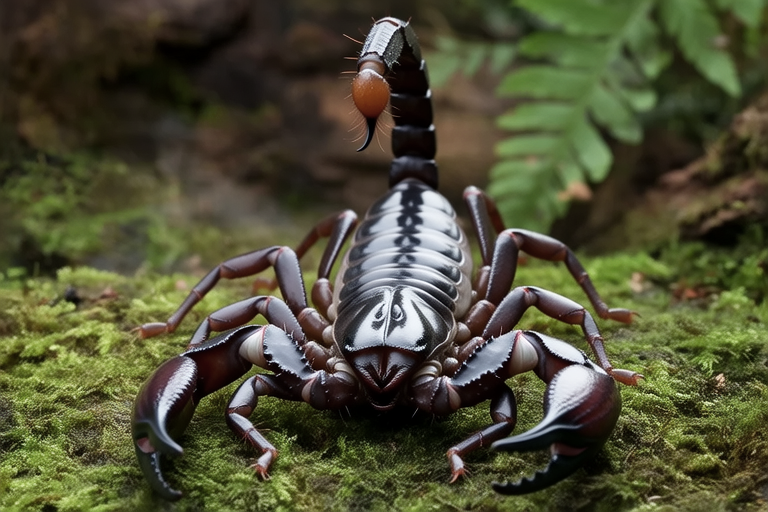
The Heterometrus spinifer is a medium-sized scorpion, typically ranging from 7 to 10 centimeters in length. Its body is segmented into three main parts: the prosoma (head), mesosoma (abdomen), and metasoma (tail). One of the most striking features of this species is its robust pincers, which are used for grasping prey and defense. The tail, ending in a venomous stinger, is equipped with sensory hairs that help the scorpion detect vibrations in its surroundings.
Perhaps the most distinctive characteristic of the Heterometrus spinifer is its spiny exoskeleton. These spines, located along the sides of the mesosoma, serve multiple purposes. They act as effective deterrents against predators, providing protection through their sharpness and rigidity. Additionally, these spines play a role in thermoregulation by increasing surface area, allowing the scorpion to dissipate heat more efficiently in the humid tropical environment.
Habitat and Distribution
Native to the dense rainforests of Malaysia, Thailand, and Indonesia, the Heterometrus spinifer thrives in environments characterized by high humidity and temperatures. It prefers areas with plenty of leaf litter, logs, and rocky crevices where it can find shelter during the day. Nocturnal by nature, this scorpion emerges at night to hunt, taking advantage of the cooler temperatures and increased activity of its prey.
Within its habitat, the Heterometrus spinifer plays an important role in maintaining ecological balance. As both predator and prey, it interacts with various organisms, contributing to the complex web of life in the jungle. Its presence helps control populations of insects and other small creatures, while also serving as a food source for larger animals like birds, reptiles, and mammals.
Hunting Techniques and Feeding Habits
The hunting strategies employed by the Heterometrus spinifer are as intriguing as they are efficient. Primarily an ambush predator, this scorpion remains motionless for extended periods, waiting for unsuspecting prey to come within reach. Once a potential meal approaches, the scorpion uses its powerful pincers to grasp and immobilize the victim before delivering a lethal dose of venom through its stinger.
The venom of the Heterometrus spinifer contains a cocktail of neurotoxins designed to paralyze or kill smaller prey items such as insects, spiders, and even small vertebrates like lizards. While its venom is potent enough to incapacitate these targets, it poses little threat to humans unless provoked or mishandled. In cases of accidental contact, symptoms may include localized pain, swelling, and redness; however, severe reactions are rare.
Interactions Within the Ecosystem
As mentioned earlier, the Heterometrus spinifer occupies a vital niche within its ecosystem, influencing the dynamics between different species. By preying upon various insect species, it helps regulate their populations, preventing overgrazing and competition for resources among plants. Furthermore, its own mortality contributes nutrients back into the soil through decomposition, enriching the forest floor and promoting plant growth.
In addition to its direct impact on other organisms, the presence of the Heterometrus spinifer influences the behavior of those sharing its habitat. For instance, certain bird species have been observed actively searching for and consuming these scorpions, likely due to their nutritional value. Meanwhile, other animals, such as nocturnal rodents, exhibit heightened caution when venturing near areas known to harbor Heterometrus spinifer, demonstrating how fear of predation shapes ecological interactions.
Myths and Misconceptions
Despite being relatively harmless to humans under normal circumstances, the Heterometrus spinifer has garnered its fair share of myths and misconceptions throughout history. One common belief is that all scorpions are highly dangerous, leading many people to view them with unnecessary fear and trepidation. However, this could not be further from the truth – most scorpions possess venom that is merely sufficient for subduing small prey rather than posing significant risks to larger animals like humans.
Another widespread myth involves the notion that scorpions glow under ultraviolet light because of bioluminescence. In reality, this phenomenon occurs due to fluorescence caused by certain compounds present in their cuticles interacting with UV radiation. While fascinating, this trait does not serve any specific biological function related to communication or attracting mates.
Conservation Status and Threats
Currently, the conservation status of the Heterometrus spinifer remains stable, thanks largely to its wide distribution across several countries and adaptability to diverse habitats. Nevertheless, threats loom on the horizon, particularly in the form of deforestation and urbanization, which encroach upon its natural range. Habitat loss forces these scorpions into closer proximity with human settlements, increasing the likelihood of encounters and potentially escalating conflicts between humans and wildlife.
To mitigate these challenges, efforts must focus on preserving intact tracts of forest while promoting sustainable land-use practices that respect local biodiversity. Education campaigns aimed at dispelling myths and fostering coexistence between humans and wildlife will also prove invaluable in ensuring the continued survival of this remarkable species.
Conclusion
The Heterometrus spinifer stands out as one of the most captivating members of the scorpion family, offering insights into the wonders of adaptation and survival in tropical ecosystems. From its formidable appearance to its crucial role within its environment, this jungle spider exemplifies the interconnectedness of life in ways both subtle and profound. By understanding and appreciating the unique attributes of the Heterometrus spinifer, we gain a deeper appreciation for the incredible diversity of our planet’s fauna and the importance of protecting it for future generations.
