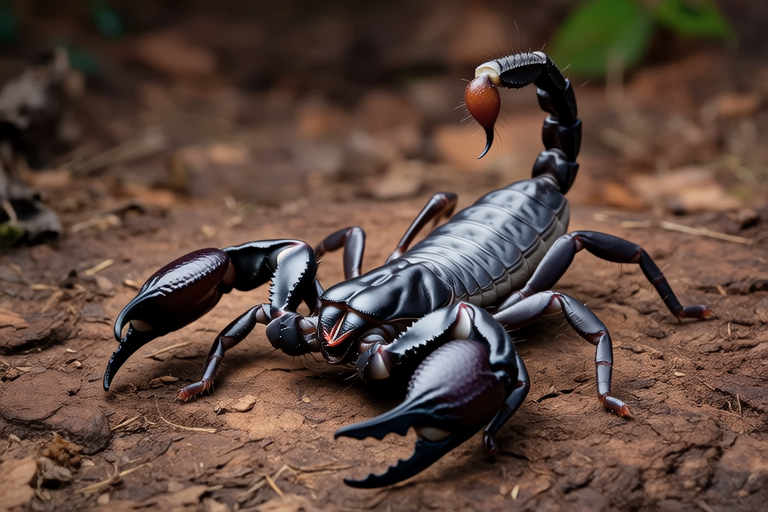
Heterometrus spinifer: The Spiky Marvel of the Arachnid World
Deep within the lush jungles and dense forests of Southeast Asia, there exists a creature that captivates the imagination with its striking appearance and enigmatic behavior. The Heterometrus spinifer, commonly known as the spiny forest scorpion, is a marvel of nature, distinguished by its unique physical features, intricate habitat, and crucial role in its ecosystem. This article delves into the fascinating world of this remarkable arachnid, exploring its physical characteristics, behavior, diet, and its place within the broader context of arachnid diversity.
Physical Characteristics: A Study in Spikes
The Heterometrus spinifer stands out from its peers due to its distinctive spiky appearance. Its body is adorned with prominent, sharp spines that run along its tail and legs, giving it a formidable and intimidating presence. These spines serve multiple purposes, primarily as a defense mechanism against predators and rivals. The spines are not just for show; they are integral to the scorpion’s survival strategy.
The spines on the tail, known as the metasoma, are particularly noteworthy. They curve upwards and are highly visible, making the scorpion look more dangerous than it actually is. The spines on the legs also play a crucial role, providing stability and enhancing the scorpion’s grip on uneven surfaces. The combination of these features makes the Heterometrus spinifer a master of its environment, capable of navigating through dense vegetation with ease.
Despite its imposing appearance, the Heterometrus spinifer is relatively small, typically measuring between 8 to 12 centimeters in length. Its body coloration ranges from dark brown to black, allowing it to blend seamlessly into the shadows of its natural habitat. The contrast between its dark color and the lighter-colored spines adds to its striking appearance.
Habitat and Behavior
The Heterometrus spinifer thrives in the humid, tropical environments of Southeast Asia, including countries such as Thailand, Malaysia, and Indonesia. It prefers densely vegetated areas, such as rainforests, where it can find ample hiding spots and prey. These scorpions are nocturnal creatures, active during the night when temperatures are cooler and humidity levels are higher, ideal conditions for their survival.
Within their habitat, Heterometrus spinifer scorpions are solitary hunters, relying on their keen senses to locate and capture prey. Their large pincers, or pedipalps, are used to grasp and immobilize their victims, while their venomous stinger delivers a potent neurotoxin that paralyzes the prey. Once subdued, the scorpion uses its mouthparts to tear apart the prey and consume it.
These scorpions are territorial and will defend their space aggressively if threatened. However, they are not inherently aggressive towards humans unless provoked. Their primary goal is to avoid detection and remain hidden, only resorting to defensive measures when necessary. This behavior underscores the importance of respecting their natural habitats and avoiding unnecessary interactions.
Diet and Ecological Role
The diet of the Heterometrus spinifer consists mainly of insects, spiders, and other small invertebrates. Its hunting techniques are both efficient and precise, making it an effective predator within its ecosystem. By controlling populations of certain insect species, the Heterometrus spinifer plays a vital role in maintaining ecological balance.
In addition to its predatory role, the Heterometrus spinifer serves as a food source for larger animals, such as birds and reptiles. This dual role highlights the interconnectedness of the ecosystem, where each organism contributes to the overall health and stability of the environment.
Myths and Misconceptions
Despite its impressive appearance, the Heterometrus spinifer is often misunderstood. One common myth is that all scorpions are highly venomous and pose a significant threat to humans. While it is true that some scorpions have potent venom, the Heterometrus spinifer belongs to a group of scorpions with less toxic venom. In most cases, a sting from this scorpion results in localized pain and swelling, similar to a bee sting.
Another misconception is that scorpions glow under ultraviolet light. While it is true that many scorpions exhibit fluorescence, this is not universal across all species. The Heterometrus spinifer does not fluoresce, which is an important distinction for those who study scorpions or encounter them in the wild.
Comparisons with Other Arachnids
To truly appreciate the uniqueness of the Heterometrus spinifer, it is helpful to compare it with other well-known arachnids. For instance, the Heterometrus spinifer is part of the family Scorpionidae, which includes over 1,700 species of scorpions worldwide. While all scorpions share certain traits, such as their segmented bodies and venomous stingers, the Heterometrus spinifer distinguishes itself through its spiky appearance and specific adaptations to its environment.
Compared to other scorpions, the Heterometrus spinifer has a more robust and muscular build, which aids in its climbing abilities and overall agility. This adaptation allows it to navigate through dense foliage with greater ease, setting it apart from ground-dwelling scorpions that rely more heavily on speed and stealth.
Another notable comparison is with the tarantula, a spider known for its size and fearsome appearance. While tarantulas are also found in tropical regions and share a similar diet, they differ significantly in their hunting methods and physical attributes. Tarantulas rely on ambush tactics and powerful fangs, whereas the Heterometrus spinifer uses its pincers and venomous stinger to subdue prey. This difference in approach highlights the diverse strategies employed by arachnids to survive in their respective environments.
Conclusion: A Resilient and Remarkable Species
The Heterometrus spinifer is a testament to the incredible diversity and adaptability of life on Earth. Its spiky features, nocturnal habits, and crucial role in its ecosystem make it a fascinating subject for study and admiration. By dispelling myths and highlighting its unique characteristics, we can foster a deeper appreciation for this remarkable species and the vital role it plays in maintaining the delicate balance of its environment.
As we continue to explore and understand the natural world, it is essential to recognize the importance of preserving habitats and protecting species like the Heterometrus spinifer. Through education and conservation efforts, we can ensure that future generations have the opportunity to witness and learn from these extraordinary creatures.
