How to Create the Ultimate Play Area for Your Golden Hamster
Golden hamsters are delightful creatures that require a carefully designed living space to thrive. Creating the ultimate play area involves understanding their specific needs and ensuring that their environment is both safe and stimulating. This article will guide you through the process of setting up an ideal habitat for your golden hamster, covering aspects like the appropriate size and type of habitat, safe and stimulating toys, suitable bedding materials, hiding spots, exercise wheels, proper lighting, temperature control, and regular maintenance and cleaning.
The Right Habitat Size and Type
A golden hamster’s habitat should be spacious enough to allow for natural behaviors and provide ample room for movement. A minimum of 24 inches (60 cm) in length, 12 inches (30 cm) in width, and 12 inches (30 cm) in height is recommended. Larger cages, such as those with multiple levels, can offer even more space for exploration and exercise. Opt for a cage made from sturdy materials like metal or plastic, ensuring it has a secure lid to prevent escapes.
Wire-bottomed cages are not recommended for golden hamsters due to their small feet and tendency to develop bumblefoot, a painful condition caused by prolonged contact with wire surfaces. Instead, choose cages with solid floors or add a thick layer of bedding to protect their paws.
Suitable Bedding Materials
Selecting the right bedding is crucial for your golden hamster’s comfort and health. Avoid cedar and pine shavings, which can cause respiratory issues and skin irritation. Opt for soft, dust-free alternatives like paper-based bedding or high-quality recycled paper pulp products. These options are absorbent, easy to clean, and gentle on your hamster’s sensitive respiratory system. Ensure that the bedding is at least 2-3 inches deep to allow your hamster to burrow and nest comfortably.
Safe and Stimulating Toys
To keep your golden hamster mentally and physically engaged, provide a variety of safe and stimulating toys. Chew toys, such as untreated wood blocks or cardboard tubes, help satisfy their natural urge to gnaw and prevent dental problems. Tunnel systems, hammocks, and ladders encourage exploration and climbing, mimicking their natural habitat. Rotate toys periodically to maintain interest and prevent boredom.
When selecting toys, ensure they are hamster-safe and free from small parts that could pose choking hazards. Avoid plastic toys with sharp edges or toxic materials.
Hiding Spots and Nesting Boxes
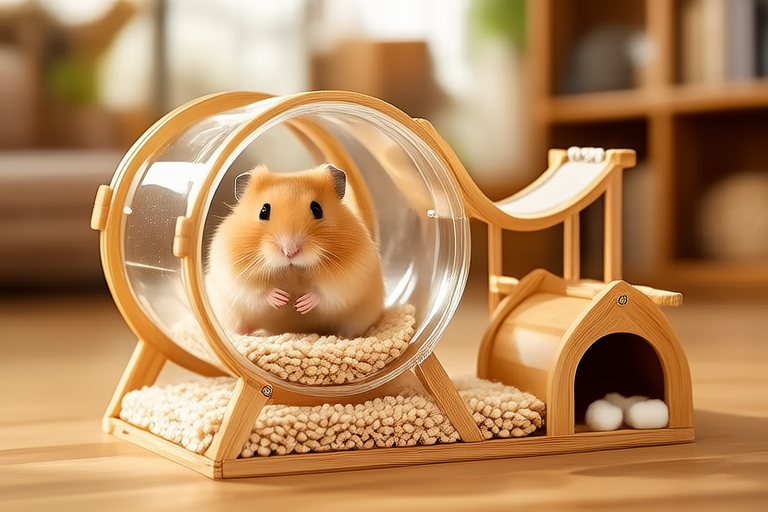
Golden hamsters are solitary animals that enjoy having their own personal space. Provide a cozy hiding spot or nesting box where your hamster can retreat when feeling stressed or tired. A small wooden house or a cardboard box with an entrance hole works well. Line the inside with soft bedding material to make it comfortable and inviting. Place the hiding spot in a quiet corner of the cage to minimize disturbances.
Exercise Wheels and Running Tunnels
Golden hamsters are active animals that need regular exercise to stay healthy. An exercise wheel is an essential component of their play area. Choose a solid-surface wheel with a diameter of at least 8 inches (20 cm) to accommodate their body length and prevent injury. Avoid wheels with bars or openings that could trap limbs or tails. In addition to the wheel, running tunnels can provide additional opportunities for physical activity and exploration.
Proper Lighting and Temperature Control
Golden hamsters are nocturnal animals, meaning they are most active during the night. While they don’t require direct sunlight, providing a consistent day-night cycle helps regulate their circadian rhythms. Position the cage away from direct sunlight and bright artificial lights to mimic a natural light-dark cycle. Use a timer-controlled light source if necessary to ensure a regular schedule.
Maintain a temperature range of 65-75°F (18-24°C) in the room where your hamster lives. Avoid placing the cage near drafts, air conditioning units, or heaters. Extreme temperatures can lead to stress and health issues. If the room becomes too warm, provide a cool hideaway or damp towel for your hamster to rest on.
Regular Maintenance and Cleaning
Keeping your golden hamster’s play area clean is vital for their health and happiness. Clean the cage and replace bedding weekly to prevent the buildup of bacteria and odors. Remove soiled areas and uneaten food immediately to maintain hygiene. Disinfect the cage and accessories with a pet-safe cleaner every few weeks, rinsing thoroughly before replacing bedding.
Inspect toys and accessories regularly for signs of wear and tear. Replace any damaged items promptly to prevent injuries. Regular maintenance also includes checking the water bottle and food dish for cleanliness and ensuring they are securely attached to the cage.
Tips for Enrichment and Interaction
In addition to creating a stimulating environment, spend time interacting with your golden hamster to enhance their quality of life. Handle them gently but frequently to build trust and establish a bond. Offer treats like fresh vegetables or hamster-safe fruits as positive reinforcement during training sessions. Engage in supervised playtime outside the cage to encourage exploration and bonding.
Be mindful of your hamster’s preferences and adjust enrichment activities accordingly. Some hamsters may enjoy digging in a shallow container filled with bedding, while others might prefer playing with puzzle toys that dispense treats. Observe your hamster’s behavior to determine what activities they find most enjoyable and incorporate those into their routine.
Safety Considerations
While creating an enriching play area, prioritize your golden hamster’s safety above all else. Avoid placing the cage in high-traffic areas where it could be knocked over or disturbed. Keep the cage out of reach of other pets, children, and curious hands. Ensure that all components of the play area are securely fastened to prevent accidents.
Monitor your hamster closely for signs of stress or discomfort, such as excessive grooming, lethargy, or changes in eating habits. Address any concerns promptly by adjusting their environment or consulting a veterinarian.
Conclusion
Creating the ultimate play area for your golden hamster requires careful consideration of their specific needs and preferences. By providing a spacious habitat, safe and stimulating toys, suitable bedding, hiding spots, exercise wheels, proper lighting, and temperature control, you can ensure that your hamster leads a happy and healthy life. Regular maintenance and cleaning, along with thoughtful interaction and enrichment activities, will further enhance their well-being. With these guidelines, you’ll be well on your way to providing your golden hamster with the perfect home.
