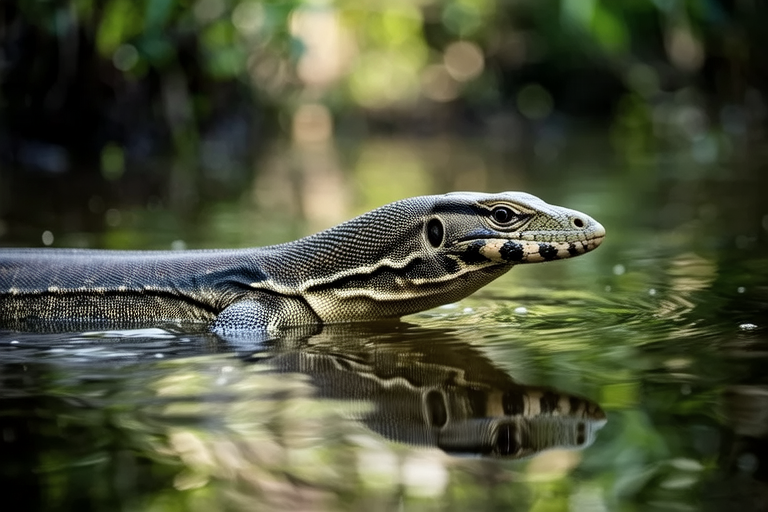
Meet the Water Monitor: The Fascinating Semi-Aquatic Reptile Taking Over Social Media
The water monitor (Varanus salvator) has recently gained significant attention on social media platforms, captivating audiences with its striking appearance, impressive swimming abilities, and unique interactions with humans. This semi-aquatic reptile, native to Southeast Asia, has been drawing in viewers who are fascinated by its physical characteristics, habitat, diet, and behavior. This article aims to provide an engaging and comprehensive overview of the water monitor, including its role in social media, conservation status, and the responsibilities associated with keeping one as a pet.
Physical Characteristics
The water monitor lizard is easily recognizable due to its sleek, elongated body and powerful tail. Adult males can reach lengths of up to 3 meters, while females are slightly smaller, typically measuring around 2 meters. Their skin is covered in scales that range in color from olive green to dark brown, often featuring yellowish or cream-colored markings. These lizards possess sharp claws and strong limbs, which aid in both climbing and digging. Their tails are prehensile, allowing them to wrap around branches or other objects for support. One of the most notable features of the water monitor is its forked tongue, used for detecting chemical signals in the environment, much like a snake’s.
Habitat and Diet
Native to Southeast Asia, the water monitor thrives in various habitats, including mangrove swamps, rivers, lakes, and coastal areas. They are highly adaptable and can be found in both freshwater and saltwater environments. Their ability to swim and dive makes them excellent hunters, and they are known to feed on a wide variety of prey, including fish, amphibians, birds, small mammals, and even carrion. Water monitors also have a reputation for being opportunistic feeders, consuming whatever food sources are available in their environment. Their diet varies depending on their location and the availability of prey, making them versatile predators.
Unique Behaviors
Water monitors are known for their remarkable agility and intelligence. They are adept at climbing trees, swimming, and diving, making them well-suited to their semi-aquatic lifestyle. Their ability to hold their breath for extended periods allows them to hunt underwater, where they can catch fish and other aquatic creatures. In addition to their impressive swimming skills, water monitors are also capable of running at high speeds on land, reaching up to 18 miles per hour. This combination of speed and agility makes them formidable predators.
One of the reasons for their popularity on social media is their curious nature and willingness to interact with humans. Many videos show water monitors approaching people, sometimes even sitting on their shoulders or allowing themselves to be petted. While this may seem tame, it is important to remember that these animals are still wild creatures and should be treated with respect. Interactions should always be supervised by experienced handlers to ensure the safety of both the animal and the person involved.
Popularity on Social Media
The water monitor’s growing presence on social media can be attributed to several factors. First, their striking appearance and unique behaviors make for compelling content. Videos of water monitors swimming, climbing, and interacting with humans are shared widely, capturing the attention of millions of viewers. Additionally, the increasing accessibility of smartphones and social media platforms has made it easier for people to document and share their encounters with these fascinating creatures. As a result, water monitors have become a symbol of the exotic and intriguing world of wildlife.
Conservation Status and Myths
Despite their popularity, water monitors face numerous threats in the wild. Habitat destruction, poaching for their skins, and overharvesting for the exotic pet trade are some of the challenges they must overcome. According to the International Union for Conservation of Nature (IUCN), the water monitor is listed as Least Concern, but local populations may be vulnerable depending on their geographic location. It is crucial to support conservation efforts and responsible breeding practices to ensure the survival of this species.
There are many myths surrounding water monitors, particularly regarding their aggression and danger to humans. While they are powerful predators, water monitors are generally not aggressive unless provoked. When handled correctly, they can be docile and even affectionate. However, it is important to approach any wild animal with caution and respect. Those interested in keeping a water monitor as a pet should be prepared for the commitment involved, including providing a suitable habitat and diet, as well as ensuring the animal’s health and well-being.
Advice for Potential Pet Owners
If you are considering keeping a water monitor as a pet, there are several factors to consider. First and foremost, ensure that you have the necessary experience and resources to care for such a large and potentially dangerous animal. Water monitors require a spacious enclosure with access to both land and water, as well as a varied diet that includes fish, insects, and rodents. They also need plenty of space to exercise and explore, so a large vivarium or outdoor enclosure is essential.
It is important to research local regulations before acquiring a water monitor, as laws governing the ownership of exotic pets vary by region. Some areas prohibit the keeping of certain species, while others require permits or licenses. Always purchase your water monitor from a reputable breeder to avoid contributing to the illegal wildlife trade.
Finally, remember that water monitors are wild animals and should never be considered fully domesticated. While they can be trained to some extent, they will always retain their natural instincts and behaviors. Approach them with caution and respect, and never handle them without proper supervision. By doing so, you can enjoy a rewarding relationship with your water monitor while ensuring its safety and well-being.
In conclusion, the water monitor is a truly remarkable creature that continues to captivate audiences on social media. With their striking appearance, impressive swimming skills, and unique behaviors, these semi-aquatic reptiles offer a window into the wonders of the natural world. However, it is important to approach them with respect and responsibility, both in the wild and as potential pets. By supporting conservation efforts and responsible breeding practices, we can help ensure the survival of this fascinating species for generations to come.
