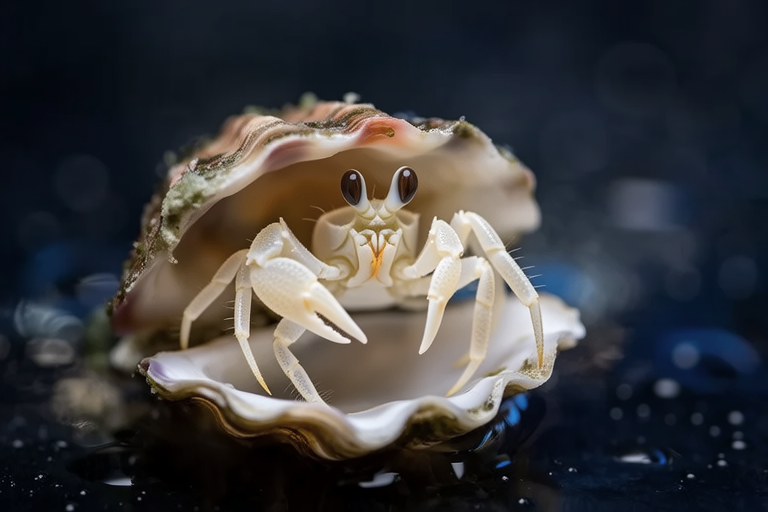
The Fascinating World of Pea Crabs: Tiny Guardians of Marine Ecosystems
Pea crabs, belonging to the family Pinnotheridae, are some of the smallest crabs in the world. Despite their diminutive size, they have a unique life cycle, fascinating habitat preferences, and intriguing symbiotic relationships that make them a crucial part of marine ecosystems. This article explores the lesser-known facts about pea crabs, their charming behaviors, and the scientific insights into their adaptations for survival.
The Unique Life Cycle of Pea Crabs
The life cycle of pea crabs is both complex and fascinating. It begins with eggs that are carried by the female crab, often inside the host organism. Once the eggs hatch, the larvae enter the water column where they undergo several molts before settling on a suitable host. The juvenile crabs then enter the host’s body cavity, where they continue to grow and develop. As adults, pea crabs remain within their hosts, benefiting from protection and nutrients.
This life cycle is particularly interesting because it highlights the adaptability of pea crabs. Their ability to find and settle on a host is crucial for their survival. The host provides a safe environment for the developing crabs, protecting them from predators and harsh environmental conditions. In return, the crabs contribute to the health of their hosts by consuming parasites and debris, which can improve the host’s overall condition.
Habitat Preferences and Adaptations
Pea crabs are found in various habitats, including estuaries, coastal waters, and even deep-sea environments. They have adapted to these diverse environments through specialized physical features and behaviors. For instance, their small size allows them to fit comfortably within the body cavities of their hosts, such as oysters, mussels, sea cucumbers, and sea stars. This adaptation not only protects them from predators but also provides them with a steady supply of food and oxygen.
One of the most remarkable adaptations of pea crabs is their ability to synchronize their movements with those of their hosts. By doing so, they can avoid detection by predators and maintain a stable internal environment. Additionally, pea crabs have developed specialized appendages that allow them to feed on the host’s tissues or filter-feed on plankton and other organic matter. These adaptations enable them to thrive in their respective habitats and play an essential role in maintaining the balance of marine ecosystems.
Symbiotic Relationships
The symbiotic relationship between pea crabs and their hosts is one of the most fascinating aspects of their biology. Pea crabs live in a commensal relationship with their hosts, meaning that the crabs benefit from the association without harming the host. However, recent studies suggest that this relationship might be more complex than previously thought. Some researchers propose that pea crabs could potentially enhance the reproductive success of their hosts by removing parasites or improving the host’s overall health.
For example, pea crabs living within oysters have been observed to consume parasitic organisms that would otherwise harm the oyster. By doing so, the crabs indirectly contribute to the oyster’s well-being, ensuring its survival and reproduction. Similarly, pea crabs residing in sea cucumbers have been found to feed on detritus and other organic matter within the cucumber’s body cavity, helping to keep the environment clean and promoting the cucumber’s growth.
The Role of Pea Crabs in Marine Ecosystems
Pea crabs play a vital role in marine ecosystems as both consumers and decomposers. As consumers, they help regulate the populations of smaller organisms, such as parasites and detritus, which can otherwise overpopulate and cause harm to their hosts. By controlling these populations, pea crabs contribute to the stability of their hosts and the broader ecosystem.
As decomposers, pea crabs assist in breaking down organic matter within their hosts, releasing nutrients back into the environment. This process enriches the surrounding waters, promoting the growth of algae and other primary producers. In turn, this supports the entire food web, from small fish to large marine mammals. Therefore, pea crabs are integral to the health and functioning of marine ecosystems, acting as both protectors and facilitators of life.
Interesting Behaviors
Pea crabs exhibit a range of interesting behaviors that contribute to their survival and success in their environments. One of the most notable behaviors is their ability to communicate with their hosts. Pea crabs can sense changes in the host’s physiological state, such as increased stress or illness, and respond accordingly. For example, if the host becomes ill, the crabs may increase their feeding activity to remove harmful organisms or assist in the healing process.
Another fascinating behavior is their courtship rituals. Male pea crabs use chemical signals to attract females, and once a pair has formed, they engage in elaborate mating dances. These dances involve synchronized movements and the exchange of pheromones, ensuring successful fertilization. After mating, the female carries the fertilized eggs until they hatch, at which point the larvae enter the water column to begin their journey toward finding a new host.
Lesser-Known Facts About Pea Crabs
Despite their small size, pea crabs have several lesser-known characteristics that make them even more intriguing. For instance, some species of pea crabs are capable of bioluminescence, producing light through a chemical reaction within their bodies. This adaptation helps them communicate with potential mates or deter predators in low-light environments. Additionally, pea crabs have been found to possess a unique immune system that allows them to resist infections and diseases, contributing to their longevity within their hosts.
Another interesting fact is that pea crabs can change color to match the appearance of their hosts. This camouflage helps them blend in with their surroundings, making it easier to avoid detection by predators. Furthermore, pea crabs have been observed to engage in cooperative behaviors, such as sharing food resources or defending their hosts against intruders. These behaviors demonstrate the complexity of their social interactions and highlight the importance of teamwork in their survival strategies.
The Charm of Pea Crabs
Pea crabs are not only scientifically fascinating but also charming creatures that capture the imagination. Their small size, intricate behaviors, and symbiotic relationships make them a delight to observe and study. Whether watching them navigate the complex world of their hosts or marveling at their ability to survive in challenging environments, pea crabs offer a window into the wonders of marine life.
In addition to their ecological significance, pea crabs have inspired artists, writers, and scientists alike. Their unique biology has been featured in children’s books, educational programs, and documentaries, introducing people of all ages to the beauty and complexity of marine ecosystems. By learning about and appreciating these tiny crustaceans, we can gain a deeper understanding of the interconnectedness of life in the ocean and the importance of preserving our planet’s biodiversity.
