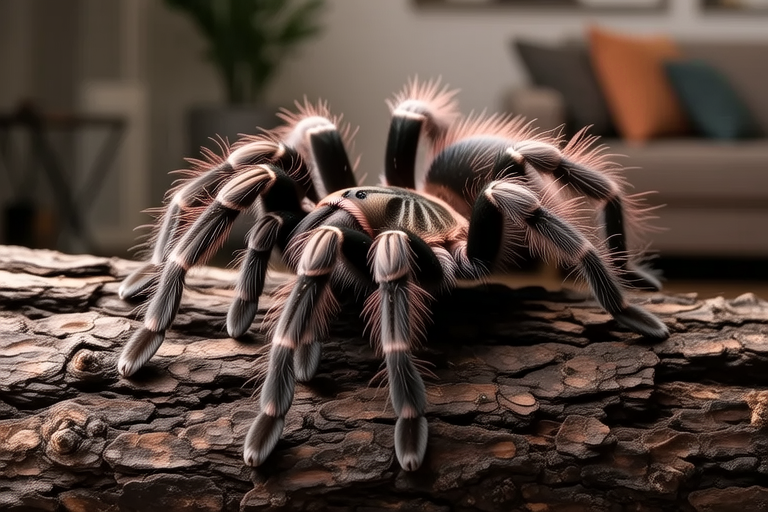
The Silent Predator: Why Tarantulas Are Quietly Taking Over Homes Worldwide
Imagine waking up to find a hairy, eight-legged creature slowly crawling across your bedroom wall—its body as large as a dinner plate, its movements deliberate and silent. For millions of people around the world, this is no longer a scene from a horror film. It’s an increasingly common reality. From suburban homes in Germany to apartments in Tokyo, from backyards in Texas to living rooms in Melbourne, tarantulas are quietly infiltrating human dwellings.
These creatures, often feared and misunderstood, are not invaders seeking to harm us. Instead, they are survivors—adapting to a rapidly changing planet, drawn by shifting climates, expanding cities, and the unintended consequences of global trade. What once seemed like rare encounters are now reported with growing frequency, sparking both alarm and curiosity. But behind the fear lies a deeper story—one of ecological balance, resilience, and the surprising role tarantulas play in our shared environment.
The Unseen Surge: A Global Trend
Recent data from pest control services, wildlife monitoring programs, and citizen science platforms reveal a striking pattern: tarantula sightings in residential areas have increased by over 60% in the past decade across North America, Europe, and parts of Asia and Australia.
In 2023, a resident in Hamburg, Germany, reported finding a European tarantula (Lycosa tarantula) in her basement during winter—a species historically confined to southern Mediterranean regions. Similarly, in Perth, Australia, homeowners have reported spotting the native red-backed tarantula (Selenops spp.) inside homes, particularly during dry seasons. In the United States, reports from states like Florida, Texas, and California have surged, with many individuals describing tarantulas entering through gaps in walls or being accidentally brought in via potted plants or shipping containers.
This isn’t just anecdotal. A 2022 study published in *Global Ecology and Conservation* analyzed over 5,000 verified sightings of tarantulas in urban and semi-urban environments worldwide. The research concluded that habitat disruption and climate shifts were primary drivers, with warmer temperatures allowing species to expand their ranges northward and into higher elevations.
Why Are They Showing Up Now?
Climate Change: Rewriting the Rules of Survival
As global temperatures rise, many tarantula species are adjusting their ranges. Historically restricted to tropical and subtropical zones, some species are now thriving in regions previously too cold for them. Warmer winters mean better survival rates for eggs and juveniles, while extended warm seasons increase feeding and mating opportunities. This shift is especially noticeable in temperate zones where summer heatwaves now mimic conditions once limited to southern latitudes.
Urban Expansion: Cities as New Habitats
Urban sprawl has fragmented natural habitats, pushing wildlife—including tarantulas—into closer contact with humans. Concrete jungles may seem inhospitable, but they offer unexpected refuge. Cracks in foundations, abandoned construction sites, under decks, and even inside utility boxes provide shelter. These microhabitats mimic the rocky crevices and burrows tarantulas prefer in the wild.
Global Trade: Accidental Passengers
One of the most overlooked factors is the role of international commerce. Tarantulas are frequently smuggled as exotic pets, but countless others hitch rides unintentionally. Potted plants, wooden crates, shipping pallets, and even clothing transported globally can carry egg sacs or juvenile spiders. Once introduced to a new region, these tiny travelers can establish populations if conditions allow.
Ecosystem Shifts: Natural Pest Controllers on the Move
Tarantulas are apex predators in their ecosystems, feeding on insects, small reptiles, and even rodents. As natural insect populations fluctuate due to pesticide use and habitat loss, tarantulas may be moving into human spaces in search of food. Their presence in homes often indicates a broader imbalance in local ecology—an ecosystem struggling to maintain its natural checks and balances.
Understanding the Creature Behind the Fear
Despite their intimidating appearance, tarantulas are among the most docile and non-aggressive arachnids known to science. Most species will flee at the first sign of danger rather than attack.
According to Dr. Sarah Lin, an arachnologist at the University of Queensland, “Tarantulas are not built for confrontation. They rely on camouflage, speed, and defensive behaviors—like kicking urticating hairs or bluffing with exposed fangs—rather than biting. A bite from a typical tarantula is painful but rarely dangerous to humans.”
Scientific studies confirm this. Research from the American Journal of Tropical Medicine and Hygiene found that out of over 3,000 documented tarantula bites between 1990 and 2020, only two cases required hospitalization—both involving individuals with severe allergies. For healthy adults, symptoms typically include localized pain, swelling, and minor inflammation lasting a few hours.
Moreover, tarantulas play a crucial role in controlling pest populations. A single adult tarantula can consume hundreds of insects annually, including cockroaches, crickets, and beetles—many of which are considered household pests. In agricultural regions, tarantulas help reduce crop-damaging insects without the need for chemical pesticides.
Busting Myths: The Truth About Tarantulas
Myth 1: All tarantulas are deadly.
Reality: No tarantula species possesses venom potent enough to kill a human. Their venom is designed for subduing prey much smaller than themselves—typically insects or small vertebrates. Even in rare cases of envenomation, the effects are comparable to a bee sting.
Myth 2: Tarantulas are aggressive toward humans.
Reality: Tarantulas avoid humans instinctively. They are nocturnal and solitary by nature. Most encounters occur when they’re displaced from their natural hiding spots or searching for food. Aggression is a last resort, not a default behavior.
Myth 3: Tarantulas are dirty or disease-carrying.
Reality: Tarantulas do not carry pathogens harmful to humans. They are clean animals that groom themselves regularly. While they can harbor mites or fungi, these are generally harmless to people and more likely to affect the spider itself.
Dr. Lin adds, “The fear of tarantulas stems largely from cultural myths and media portrayals. In reality, they are more afraid of us than we are of them.”
Real Encounters: Stories from Around the Globe
Japan – The Tokyo Apartment Incident (2023):
A woman in central Tokyo discovered a Japanese tarantula (Haplopelma nigrescens) in her kitchen cupboard after receiving a shipment of imported orchids. The spider was later released into a nearby forest preserve under the guidance of local wildlife officials.
United States – The Texas Backyard Surprise (2022):
A family in San Antonio found a Goliath birdeater (Theraphosa blondi), one of the largest tarantulas in the world, wandering near their outdoor grill. After consulting a local entomologist, they learned the spider had likely escaped from a pet owner’s enclosure. It was safely relocated.
South Africa – The Cape Town Garden Encounter (2021):
A gardener in Cape Town encountered a yellow-lunged tarantula (Pterinopelma sp.) while pruning shrubs. Though startled, he documented the sighting and shared it with a regional biodiversity group. The species, once thought rare in urban areas, is now showing signs of adaptation to city gardens.
Living Alongside: Practical Steps for Coexistence
Encountering a tarantula doesn’t require panic or immediate extermination. With a little knowledge and respect, humans and tarantulas can peacefully coexist.
What to Do If You See One:
- Stay calm. Move slowly and avoid sudden gestures.
- Do not attempt to handle or corner the spider. This increases stress and the chance of defensive reactions.
- Use a cup and card method to gently guide the spider into a container and release it outdoors—preferably far from your home, in a safe, vegetated area.
- Check for hidden entry points. Seal cracks around windows, doors, and utility lines to prevent future entries.
When to Seek Professional Help:
- If you suspect a tarantula is nesting inside walls or under flooring.
- If the spider appears injured, disoriented, or behaving unusually.
- If you live in an area where invasive or potentially hazardous species might be present (e.g., certain South American species).
Many municipalities now offer free wildlife assistance services. Contacting a local conservation group, university biology department, or certified pest control specialist trained in arachnid handling is often the safest and most humane option.
Creating Tarantula-Friendly Spaces:
Instead of eliminating all potential habitats, consider creating designated green zones outside your home—such as rock piles, mulch beds, or native plantings—that attract beneficial insects and provide natural shelter for tarantulas. This encourages them to stay away from living spaces while supporting local biodiversity.
A Call for Respectful Coexistence
Tarantulas are not intruders. They are indicators—silent messengers of a planet undergoing profound transformation. Their increasing presence in homes is not a sign of invasion, but of adaptation. As ecosystems evolve and climate patterns shift, so must our understanding of wildlife and our relationship with it.
These creatures, long maligned by folklore and fiction, deserve recognition for their ecological value and quiet resilience. They remind us that nature does not always announce its arrival with fanfare. Sometimes, it comes in silence—across a floorboard, beneath a shelf, or through a crack in the wall.
By choosing awareness over fear, education over eradication, and compassion over panic, we can foster a future where humans and tarantulas share space—not as enemies, but as neighbors in a complex, interconnected world.
The next time you see a tarantula in your home, pause. Breathe. And remember: you’re not facing a predator. You’re witnessing a survivor—doing exactly what nature demands of every creature: adapt, endure, and thrive.
