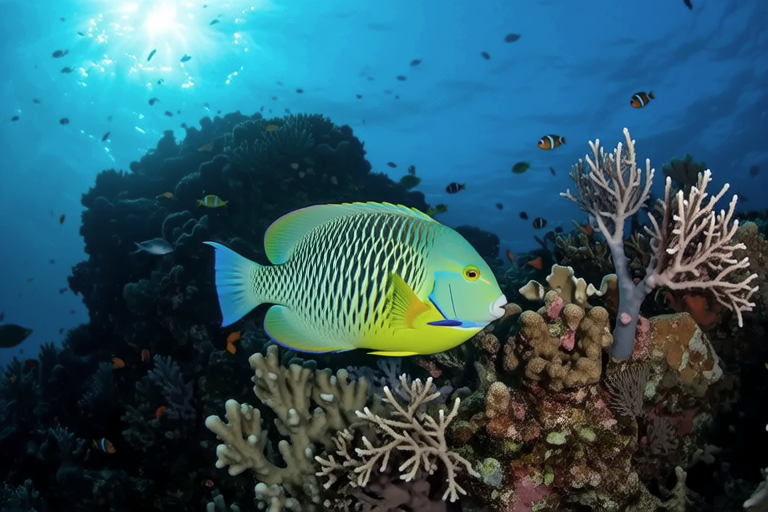
Parrot Fish Power: How One Tiny Fish Cleans Up Entire Coral Ecosystems
Imagine a fish so small it fits in your palm, yet capable of reshaping entire underwater worlds. Meet the parrot fish—nature’s quiet reef engineers, whose powerful beaks and surprising digestive systems are essential guardians of coral reefs across tropical oceans. While most people think of coral reefs as fragile, delicate ecosystems, they’re actually dynamic, living communities that depend on a delicate balance. And at the heart of that balance lies one unassuming creature: the parrot fish.
Despite their colorful appearance and playful names, parrot fish aren’t just eye candy for divers. They are unsung heroes of marine conservation—natural landscapers, sand producers, and algae controllers—all thanks to a simple but vital habit: biting coral.
The Beak That Shapes Reefs
Parrot fish get their name from their distinctive beak-like mouth, formed by fused teeth that resemble a parrot’s bill. This specialized jaw isn’t just for show—it’s a precision tool for survival. These fish don’t eat coral because they like its taste. Instead, they bite off chunks of live coral to reach the hidden layer of algae growing beneath. Think of it like a carpenter removing plaster to access the wood underneath.
Once they’ve bitten into the coral, they use their strong jaws to grind the hard calcium carbonate structure into fine particles. What remains after digestion? A mix of crushed coral and waste—essentially, sand. In fact, one large parrot fish can produce up to 200 pounds (90 kilograms) of sand per year. That’s enough to fill several bathtubs! Over time, this process contributes significantly to the formation of tropical beaches, turning ancient reef fragments into the soft, white sands we love to walk on.
Algae Control: The Reef’s Natural Weeding Service
Here’s where things get really important. Coral reefs thrive when there’s a healthy balance between corals and algae. But without natural controls, algae can grow out of hand—overwhelming young corals, blocking sunlight, and smothering reef structures. Left unchecked, this algal overgrowth can lead to a complete collapse of the reef ecosystem.
Enter the parrot fish. By grazing on algae-covered coral, they act as nature’s lawn mowers. Their feeding behavior keeps algae populations in check, giving baby corals space and light to grow. Scientists have observed that reefs with healthy parrot fish populations recover faster after bleaching events or storms. In contrast, reefs where parrot fish have been overfished often experience rapid degradation—algae take over, and the reef turns into a barren wasteland.
One study conducted in the Caribbean found that reefs with abundant parrot fish had nearly double the amount of live coral cover compared to those where these fish were scarce. It’s not just about aesthetics; it’s about survival. Parrot fish help maintain the very foundation of reef biodiversity.
Sandmakers and Ecosystem Engineers
While many people associate coral reefs with vibrant colors and teeming life, few realize that the sand beneath our feet is largely made by fish. Parrot fish are among the most prolific contributors to this process. As they chew through coral, their digestive systems break down the calcium carbonate into tiny particles. These particles are then excreted as fine sand, which washes away into lagoons and onto shorelines.
This might seem like a minor detail, but it has massive implications. Beaches in places like Hawaii, the Maldives, and the Bahamas owe much of their existence to the daily work of parrot fish. Without them, coastal erosion would accelerate, and island communities could face increased flooding and habitat loss. In essence, parrot fish are not only reef protectors—they’re also architects of our coastlines.
Climate Change and Human Threats: A Double Whammy
Today, coral reefs face unprecedented threats. Rising sea temperatures cause mass coral bleaching, ocean acidification weakens coral skeletons, and pollution fuels algal blooms. Meanwhile, human activities—including overfishing, destructive fishing practices, and coastal development—are pushing reef ecosystems beyond their limits.
And parrot fish are especially vulnerable. Because they’re prized for their meat in some regions, they are frequently targeted by commercial and recreational fisheries. In parts of the Caribbean and Southeast Asia, parrot fish populations have declined by more than 50% in recent decades. When these fish disappear, the consequences ripple through the entire reef system.
Climate change compounds the problem. Warmer waters stress corals, making them more susceptible to disease and death. In such times, the role of parrot fish becomes even more critical. With fewer corals surviving, the remaining ones need all the help they can get—especially from natural grazers who prevent algae from taking over. But if parrot fish are gone, recovery becomes nearly impossible.
It’s like trying to rebuild a house while someone keeps removing the tools you need. Without parrot fish, reefs lose a key component of resilience—their ability to bounce back after disasters.
Science Speaks: Why Parrot Fish Matter More Than Ever
Recent research has highlighted just how vital parrot fish are to reef health. A landmark study published in the journal *Nature* showed that reefs with intact parrot fish populations were far more likely to recover from bleaching events. The researchers concluded that protecting these fish could be one of the most effective ways to boost reef resilience in a warming world.
Another study in Bonaire, a Caribbean island known for its strong marine conservation policies, demonstrated that protected areas with thriving parrot fish populations saw higher coral recruitment rates and greater overall reef complexity. In short, where parrot fish flourish, so do reefs.
Scientists now refer to parrot fish as “ecosystem engineers”—creatures whose actions fundamentally shape their environment. Their influence extends far beyond what meets the eye. By controlling algae, creating sand, and enabling coral growth, they support hundreds of other species, from shrimp and crabs to larger predators like groupers and sharks.
A Call to Action: Protect the Parrot Fish
The story of the parrot fish is one of quiet power and profound importance. They remind us that even the smallest creatures can play outsized roles in maintaining Earth’s balance. Yet, their survival is not guaranteed. If we continue to overfish them and degrade their habitats, we risk losing not just a single species—but entire reef ecosystems that sustain millions of people and countless marine lives.
So what can we do?
- Support sustainable seafood choices: Avoid eating parrot fish if you live near reef areas. Choose seafood that comes from responsibly managed sources.
- Advocate for marine protected areas: Push for stronger regulations that ban or limit fishing of parrot fish in sensitive reef zones.
- Spread awareness: Share the story of the parrot fish. Educate friends, family, and local communities about their crucial role in keeping reefs alive.
- Reduce your environmental footprint: Minimize plastic use, cut down on carbon emissions, and support clean energy. Every action helps slow climate change—the biggest threat to reefs.
We don’t need to wait for dramatic solutions or technological breakthroughs. Protecting parrot fish is a practical, immediate step toward saving coral reefs. It’s a win-win: healthier reefs mean more fish, better tourism, stronger coastlines, and cleaner oceans.
Hope in the Waters
There is still hope. In places where conservation efforts have taken root—like Palau, where parrot fish are legally protected—reefs are showing signs of recovery. Divers report clearer water, more vibrant corals, and an increase in fish diversity. These success stories prove that when we protect nature’s key players, ecosystems can rebound.
The parrot fish may be small, but their impact is enormous. They are living proof that nature has built-in solutions—if only we let them work. By safeguarding these remarkable fish, we aren’t just preserving a species. We’re investing in the future of our oceans, our coasts, and our planet.
Next time you stand on a tropical beach, feel the warm sand beneath your feet. Remember: that sand was once part of a living reef, shaped by the steady, tireless bite of a parrot fish. Let that moment inspire you. Let it remind you that every creature, no matter how small, matters.
Protect the parrot fish. Protect the reef. Protect our shared future.
