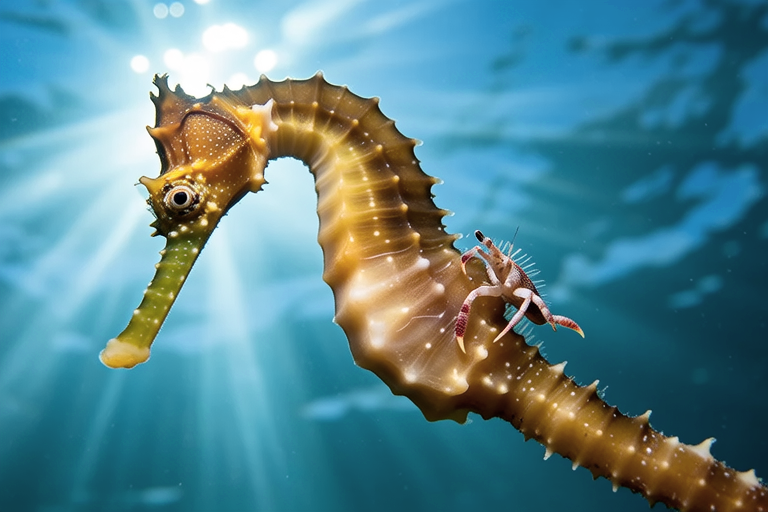
Meet the Mini Marvel: The Tiny Pea Crab That Lives Inside Sea Horses
In the vast oceanic world, where creatures large and small coexist in intricate relationships, one of the most fascinating partnerships is that between the tiny pea crab and its host, the sea horse. This unique symbiotic relationship is a testament to nature’s ingenuity, offering both species distinct advantages while posing certain challenges. Dive into the underwater world to explore the life of these mini marvels and discover the wonders of their symbiosis.
The Unique Symbiotic Relationship Between Pea Crabs and Sea Horses
Symbiosis, a term derived from the Greek words for ‘living together’, describes a close biological interaction between two different species. In the case of pea crabs and sea horses, the relationship is commensal, meaning it benefits one party (the pea crab) without significantly impacting the other (the sea horse). The pea crab finds shelter and protection within the sea horse’s body, while the sea horse remains largely unaffected, except for minor structural changes.
This relationship has evolved over millions of years, creating a harmonious balance that allows both species to thrive. The pea crab, a diminutive crustacean, takes up residence within the sea horse’s pouch, a specialized brooding area where male sea horses carry developing offspring. Here, the pea crab is shielded from predators and provided with a stable environment conducive to growth and reproduction.
Physical Characteristics of Pea Crabs
Pea crabs are aptly named due to their small size, typically ranging from 3 to 6 millimeters in length. Their bodies are flattened and oval-shaped, allowing them to fit snugly within the sea horse’s pouch. They possess soft, translucent exoskeletons, which offer flexibility and adaptability to their confined living space. Unlike many other crabs, pea crabs lack claws, making them less formidable but more suited to their peaceful existence within their hosts.
These crabs have adapted to their lifestyle by developing specialized appendages that enable them to grasp onto the internal structures of their hosts. They use their modified mouthparts to feed on the mucus secreted by the sea horse’s skin, as well as any organic debris found within the pouch. Their coloration often matches that of their host, providing camouflage and further protection from potential threats.
How Pea Crabs Manage to Live Inside Sea Horses
The process of a pea crab entering a sea horse’s pouch is a delicate and intricate affair. Female pea crabs are the ones who venture out into the open water, seeking a suitable host. Once located, they enter the pouch through the male sea horse’s cloaca, a single opening used for both reproduction and excretion. This entry point is strategically located at the base of the sea horse’s tail, ensuring that the female crab can reach the pouch without causing harm to her host.
Inside the pouch, the pea crab finds a microenvironment rich in nutrients and free from external threats. The sea horse’s pouch provides a constant supply of food, primarily in the form of mucus and organic matter, which the pea crab can easily consume. Additionally, the pouch’s temperature and pH levels remain relatively stable, promoting the crab’s health and development. As the sea horse moves through the water, the gentle flow of water helps oxygenate the pouch, ensuring a healthy living environment for both the developing offspring and the resident pea crab.
Benefits and Challenges of the Symbiotic Relationship
Benefits for the Pea Crab: The pea crab gains significant advantages from this symbiotic relationship. By residing within the sea horse’s pouch, the crab enjoys protection from predators and harsh environmental conditions. The pouch also serves as a nursery for the crab’s young, increasing their chances of survival. Furthermore, the constant supply of nutrients from the sea horse’s mucus and organic matter ensures that the pea crab has ample sustenance for growth and reproduction.
Challenges for the Pea Crab: Despite these benefits, the pea crab faces several challenges. The confined space within the sea horse’s pouch limits the crab’s mobility, making it difficult to escape threats or find new hosts. Additionally, the presence of developing sea horse offspring can lead to competition for resources, potentially affecting the crab’s ability to thrive.
Benefits for the Sea Horse: For the sea horse, the symbiotic relationship with the pea crab is generally neutral. The pea crab does not significantly impact the sea horse’s health or reproductive success. However, there is some evidence to suggest that the presence of a pea crab may help regulate the microbial community within the pouch, potentially benefiting the developing offspring.
Challenges for the Sea Horse: While the relationship is mostly beneficial for the pea crab, it can pose certain challenges for the sea horse. The presence of the pea crab may alter the pouch’s internal environment, potentially affecting the sea horse’s reproductive physiology. Additionally, the structural changes required to accommodate the pea crab could impact the sea horse’s overall fitness.
Lifecycle of Pea Crabs Within Their Hosts
The lifecycle of pea crabs within their hosts is a fascinating and complex process. When a female pea crab enters the sea horse’s pouch, she mates with a male pea crab already residing there. After fertilization, the female crab lays eggs within the pouch. These eggs hatch into larvae, which then develop into juvenile crabs. Throughout this process, the sea horse’s pouch provides a protected and nutrient-rich environment, ensuring the successful development of the pea crab offspring.
Once the juvenile crabs reach maturity, they leave the pouch to seek out new hosts. This cycle continues, with each generation of pea crabs finding a new sea horse to call home. The timing of this departure is crucial, as it ensures that the juvenile crabs do not compete with the developing sea horse offspring for resources. This delicate balance is essential for the survival of both species.
The Importance of Studying Symbiotic Relationships in Marine Biology and Conservation Efforts
Understanding the symbiotic relationship between pea crabs and sea horses is vital for advancing our knowledge of marine ecosystems and biodiversity. By studying these relationships, scientists can gain insights into the evolutionary processes that shape species interactions and the adaptations that allow organisms to thrive in specific environments. This knowledge can inform conservation strategies, helping to protect vulnerable species and maintain the delicate balance of marine ecosystems.
Moreover, the study of symbiotic relationships can provide valuable information about the effects of environmental changes, such as climate change and pollution, on marine life. By monitoring the health and distribution of symbiotic species, researchers can identify early warning signs of ecosystem decline and implement targeted conservation measures. This holistic approach to marine conservation ensures the preservation of diverse and interconnected marine communities, safeguarding the future of our oceans.
In conclusion, the symbiotic relationship between pea crabs and sea horses is a remarkable example of nature’s complexity and adaptability. Through their unique partnership, these two species demonstrate the power of cooperation and adaptation in the face of environmental challenges. By continuing to study and appreciate these relationships, we can deepen our understanding of the intricate web of life that exists beneath the waves and work towards protecting the marine world for generations to come.
