The Mysterious World of Heterometrus Spinifer: A Unique Scorpion Species
In the vast realm of arachnids, few creatures capture the imagination quite like scorpions. Among these enigmatic arachnids, one stands out for its rarity and unique characteristics: Heterometrus spinifer. This elusive species, known for its striking appearance and intriguing behaviors, is a true marvel of nature. Let us embark on a journey to explore the mysterious world of Heterometrus spinifer, delving into its rarity, geographical distribution, physical attributes, behavior, habitat, diet, and the challenges it faces in its natural environment.
Rarity and Geographical Distribution
Heterometrus spinifer is a rare scorpion species primarily found in the tropical regions of Southeast Asia, including parts of Thailand, Malaysia, and Indonesia. Its habitat preference for dense, humid forests and rocky outcrops makes it particularly challenging to locate. The species’ limited range and specific environmental requirements contribute to its rarity, making it a subject of fascination for biologists and nature enthusiasts alike.
Physical Characteristics
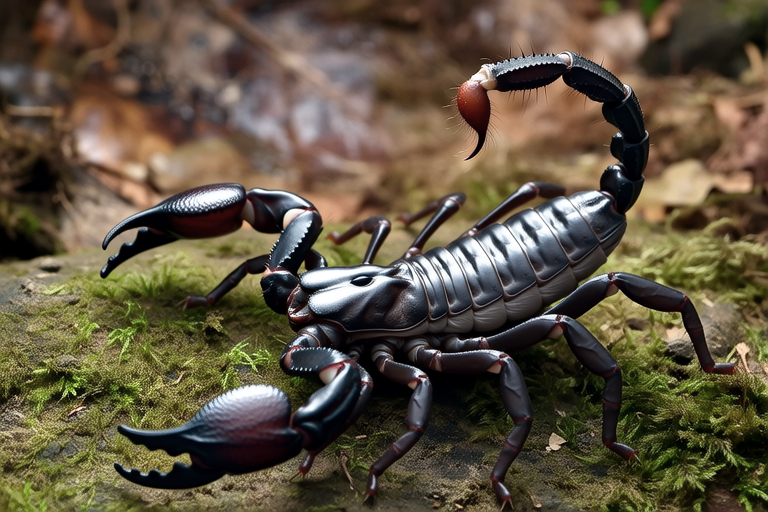
The Heterometrus spinifer is a medium-sized scorpion, typically measuring between 7 to 10 centimeters in length. Its body is predominantly dark brown, providing excellent camouflage against the forest floor. One of the most distinctive features of this species is the prominent spine located at the tip of its tail. This spine serves as both a defensive mechanism and a means of prey immobilization. The scorpion’s pincers, or pedipalps, are robust and well-adapted for grasping and holding onto prey.
Unlike many other scorpion species, which often have a more uniform coloration, Heterometrus spinifer exhibits subtle variations in color along its body, with lighter shades on its legs and a darker hue towards its tail. These variations help it blend seamlessly into its surroundings, enhancing its ability to ambush prey and avoid detection by predators.
Behavior and Habitat Preferences
Heterometrus spinifer is a nocturnal predator, spending the daylight hours hidden under rocks, logs, or within crevices. Its nocturnal lifestyle allows it to avoid the harsh midday sun and take advantage of cooler temperatures and higher humidity levels during the night. The species is highly territorial, defending its burrow or shelter from intruders, which can include both conspecifics and potential predators.
The preferred habitat of Heterometrus spinifer is characterized by dense vegetation, rocky terrain, and ample hiding spots. It thrives in areas where it can find cover from both direct sunlight and potential threats. These habitats are often found near water sources, which provide both hydration and a rich source of prey.
Diet and Feeding Habits
The diet of Heterometrus spinifer consists mainly of insects, spiders, and other small invertebrates. As an ambush predator, it relies on its keen senses to detect movement and vibrations in the surrounding environment. Once prey is detected, the scorpion uses its powerful pincers to grasp and hold onto its target, delivering a venomous sting if necessary. The venom serves multiple purposes, acting both as a defensive mechanism and a means to subdue prey quickly.
Interestingly, Heterometrus spinifer has been observed to display cannibalistic tendencies, especially when food resources are scarce. This behavior underscores the competitive nature of its existence and the importance of securing adequate nutrition.
Unique Survival Strategies and Adaptations
One of the most remarkable adaptations of Heterometrus spinifer is its ability to survive in environments with high humidity and variable temperatures. The species has developed a thick exoskeleton that helps retain moisture, crucial for its survival in humid conditions. Additionally, it has evolved specialized sensory organs, such as the pectines located beneath its abdomen, which allow it to detect chemical signals and vibrations in the substrate.
Another unique feature of Heterometrus spinifer is its venom, which contains a complex cocktail of toxins designed to paralyze prey. Unlike many other scorpion species, which rely primarily on their pincers to subdue prey, Heterometrus spinifer often uses its venom to incapacitate larger or more resilient targets. This adaptation allows it to exploit a wider range of prey items, increasing its chances of survival in a competitive ecosystem.
Comparison with Other Scorpion Species
When compared to other scorpion species, Heterometrus spinifer stands out due to its unique combination of physical characteristics and behavioral traits. For instance, the venom of Heterometrus spinifer is less potent than that of some desert-dwelling species, reflecting its need to conserve energy in a humid environment rather than relying solely on toxicity to deter predators. Additionally, its preference for humid forests sets it apart from many desert-adapted scorpions, which have evolved to thrive in arid conditions.
Another notable difference lies in the structure of its tail. While many scorpion species possess a simple, curved tail, the spine on the tail of Heterometrus spinifer serves as a distinct identifier. This spine not only enhances its defensive capabilities but also aids in prey immobilization, making it a versatile tool in the scorpion’s arsenal.
Challenges and Conservation Efforts
Despite its fascinating attributes, Heterometrus spinifer faces numerous challenges in its natural environment. Deforestation, habitat destruction, and climate change pose significant threats to its survival. As human populations expand and encroach upon its habitat, the availability of suitable living spaces for this species diminishes. Moreover, the loss of biodiversity in these ecosystems reduces the abundance of prey, further complicating the scorpion’s ability to thrive.
Conservation efforts are essential to safeguard the future of Heterometrus spinifer. Establishing protected areas and implementing sustainable land-use practices can help preserve the integrity of its habitat. Additionally, raising awareness about the importance of conserving this species and its ecosystem can inspire collective action among local communities and governments.
In conclusion, the Heterometrus spinifer is a truly unique and captivating species, offering a glimpse into the wonders of the natural world. Its rarity, combined with its intriguing physical and behavioral traits, make it a subject of both scientific interest and public admiration. By understanding and addressing the challenges it faces, we can work towards ensuring the continued existence of this remarkable scorpion for generations to come.
