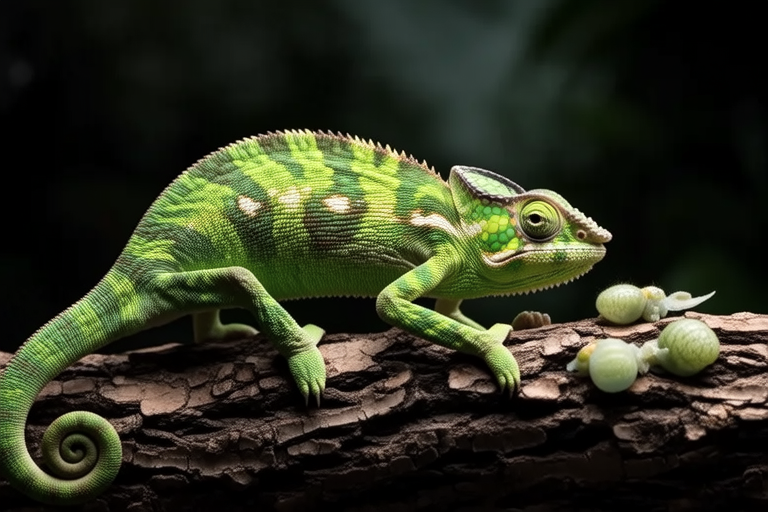
The Life Cycle of a Chameleon: From Tadpole to Adult
The chameleon is one of nature’s most fascinating creatures, known for its ability to change colors and its long, sticky tongue that can catch prey with remarkable precision. This article will guide you through the entire life cycle of a chameleon, from the tiny eggs to the fully grown adult. We’ll explore their unique physical adaptations, dietary changes, habitat preferences, and the challenges they face. By the end, you’ll have a deeper appreciation for these remarkable reptiles.
Stage 1: The Egg
The journey of a chameleon begins as a small egg, often referred to as a “tadpole” due to its size. Female chameleons lay between 20 and 80 eggs, depending on the species. These eggs are deposited in soil or leaf litter, where they remain hidden from predators. The eggs are soft and leathery, providing protection and moisture for the developing embryos.
Chameleon eggs require specific conditions to hatch successfully. Temperature and humidity levels play crucial roles in determining the sex of the offspring and the length of incubation. Incubation periods can vary from four to twelve months, depending on the species and environmental conditions.
Stage 2: Hatching
When the time comes, the eggs begin to crack open, and tiny chameleons emerge. These hatchlings are miniature versions of their adult counterparts, complete with their characteristic eyes and prehensile tails. However, they are much smaller and more vulnerable than adults.
Newly hatched chameleons are approximately 3 inches long and weigh less than a gram. Their eyes are already capable of rotating independently, allowing them to scan their surroundings for potential threats or food sources. Despite their small size, they possess fully functional tongues, which they use to capture insects.
Stage 3: Juvenile Stage
As juveniles, chameleons grow rapidly, doubling or tripling in size within the first few weeks. During this stage, they develop their unique physical characteristics, such as the ability to change colors. This adaptation serves multiple purposes, including communication, temperature regulation, and camouflage.
Juvenile chameleons primarily feed on small insects like fruit flies and crickets. As they grow, their diet expands to include larger prey items, such as grasshoppers and locusts. Their digestive system adapts to process solid food efficiently, enabling rapid growth.
At this stage, chameleons prefer habitats rich in vegetation, such as rainforests and savannas. They seek out areas with plenty of perches and hiding spots, which provide protection from predators and facilitate hunting.
Stage 4: Metamorphosis
Metamorphosis marks the transition from juvenile to adult chameleon. This process is gradual and occurs over several months. During this period, chameleons undergo significant physical changes, including increased body size, enhanced color-changing abilities, and improved hunting skills.
Adult chameleons are more adept at regulating their body temperature through behavioral thermoregulation. They bask in the sun to warm up and retreat to shaded areas when temperatures become too high. This adaptation allows them to maintain optimal physiological function and energy efficiency.
Stage 5: Adult Stage
Once fully grown, adult chameleons reach their maximum size, which varies by species. Some species, like the Parson’s chameleon, can grow up to two feet in length, while others, such as the Pygmy chameleon, may only reach a few inches. Regardless of size, adult chameleons exhibit remarkable physical adaptations that enable them to thrive in their environments.
One of the most striking features of chameleons is their ability to change color. This adaptation is not just for camouflage but also serves as a means of communication. Chameleons can display various colors to signal aggression, submission, or readiness to mate. The mechanism behind this ability involves specialized cells called chromatophores, which contain pigments that reflect light in different wavelengths. By adjusting the spacing of these cells, chameleons can produce a wide range of colors.
Adult chameleons have a varied diet, consisting of insects, spiders, and even small birds and lizards. Their tongues, which can extend up to twice their body length, are equipped with a sticky tip that helps them capture prey with precision. Chameleons can shoot their tongues at incredible speeds, reaching targets in milliseconds.
Adult chameleons prefer habitats with dense vegetation, such as rainforests, deserts, and savannas. They rely on trees, bushes, and other plants for shelter, perching, and hunting. Chameleons are arboreal, meaning they spend most of their lives in trees, where they can find both food and protection from predators.
Challenges Faced by Chameleons
Despite their impressive adaptations, chameleons face numerous challenges throughout their lives. Habitat loss and fragmentation are major threats to many chameleon species, particularly those living in tropical forests. Deforestation, agricultural expansion, and urbanization reduce the availability of suitable habitats, forcing chameleons to compete for limited resources.
Predation is another significant challenge. Chameleons are preyed upon by a variety of animals, including birds, snakes, and mammals. Their color-changing abilities and keen eyesight help them avoid detection, but they are not foolproof defenses. Additionally, chameleons face competition from other species for food and territory.
Invasive species pose additional risks to native chameleon populations. Non-native predators, such as rats and mongooses, can disrupt local ecosystems and increase predation pressure on chameleons. Similarly, introduced plant species can alter habitats, reducing the availability of suitable perches and hiding spots.
Conservation Efforts
To address these challenges, conservationists and researchers are working together to protect chameleon populations and their habitats. Efforts include habitat restoration, anti-poaching measures, and captive breeding programs. By raising awareness about the importance of preserving chameleon species, we can help ensure their survival for future generations.
Many organizations and individuals are dedicated to conserving chameleons and their habitats. For example, the Association Européenne pour l’Étude et la Conservation des Chamaeleons (AEEC) works to promote research, education, and conservation initiatives. Similarly, the International Union for Conservation of Nature (IUCN) maintains a Red List of Threatened Species, which includes information on chameleon conservation status.
Conclusion
The life cycle of a chameleon is a testament to the wonders of nature. From the tiny eggs to the fully grown adult, each stage presents unique challenges and opportunities for growth and survival. Through their remarkable physical adaptations, dietary changes, and interactions with their environment, chameleons demonstrate the resilience and adaptability of life.
We hope this article has provided you with a deeper understanding and appreciation of these fascinating creatures. Whether you’re a seasoned biologist or a curious beginner, there’s always more to learn about the world around us. By continuing to study and protect chameleons, we can ensure that future generations will have the opportunity to marvel at these incredible animals.
