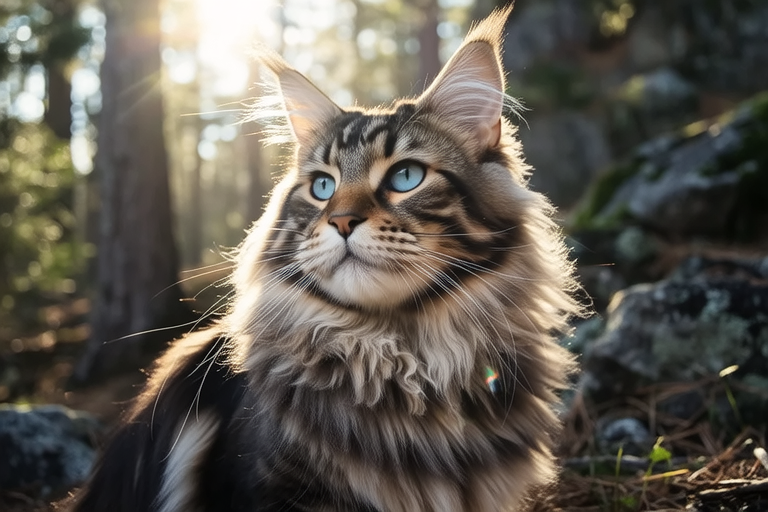
From Forests to Living Rooms: The Journey of Maine Coons
The journey of the Maine Coon from the vast forests of North America to cozy living rooms around the world is a tale of adaptation, survival, and endearing charm. These majestic felines, known for their striking appearance and gentle demeanor, have captured the hearts of many. Their origins lie deep within the rugged landscapes of New England, where they developed unique characteristics that have made them stand out among other breeds.
The Origins in the Wild
Maine Coons are believed to have descended from domesticated cats brought over by European settlers. These early cats had to adapt to the harsh, cold climate of New England, leading to the development of several distinctive features. One of the most notable adaptations is their thick, water-resistant coat, which provides insulation against the biting winds of winter. Their large paws, often tufted with fur, serve as natural snowshoes, allowing them to navigate through deep snow with ease.
Another hallmark of the Maine Coon is their impressive size. Males can weigh up to 18 pounds, with females typically being slightly smaller. This robust build is well-suited for their original role as efficient hunters. Their keen senses and agile bodies make them adept at catching small prey such as birds and rodents. This natural hunting instinct is still evident today, even though most Maine Coons now enjoy a life of comfort and leisure.
Evolution into Companion Animals
Over time, the Maine Coon’s role shifted from that of a working cat to a cherished companion. Their friendly and sociable nature has always been a defining trait, making them ideal pets. Unlike some other breeds that prefer solitude, Maine Coons tend to form strong bonds with their human families. They are known for their playful and affectionate behavior, often following their owners from room to room or curling up beside them for a nap.
The intelligence of Maine Coons is another factor that has contributed to their popularity. They are quick learners and can be trained to perform simple tricks or respond to commands. This intelligence also manifests in their problem-solving abilities, which can sometimes lead to amusing antics. For instance, they might figure out how to open doors or cabinets to reach treats or toys.
Historical Recognition
The Maine Coon was officially recognized as a distinct breed in the late 19th century. One of the earliest mentions of the breed dates back to the 1860s when a cat named Cosey won a prize at the Skowhegan Fair in Maine. However, it wasn’t until the 1950s that serious efforts were made to establish breeding standards and promote the breed. In 1976, the Cat Fanciers’ Association (CFA) granted full championship status to the Maine Coon, cementing its place among the most revered breeds.
Adaptation to Modern Living
As Maine Coons transitioned from the wild to domesticated life, they demonstrated remarkable adaptability. Their social behavior makes them excellent companions for families and individuals alike. They are generally good with children and other pets, provided they are introduced properly. Their calm and patient nature means they can tolerate the chaos that often accompanies family life.
One of the challenges faced by Maine Coons in modern homes is the need for regular grooming. Their long, luxurious coats require daily brushing to prevent matting and keep their skin healthy. Despite this maintenance requirement, many owners find the task enjoyable, seeing it as a bonding activity with their pets.
Health and Care
While Maine Coons are generally healthy, they are prone to certain genetic conditions. Hip dysplasia and cardiomyopathy are two common issues that can affect the breed. Responsible breeding practices, including genetic testing, can help reduce the incidence of these problems. Regular veterinary check-ups and a balanced diet are essential for maintaining the health of these magnificent cats.
The Enduring Appeal
The enduring appeal of Maine Coons lies in their combination of beauty, intelligence, and temperament. Their striking appearance, with tufted ears and a flowing tail, has earned them the nickname “gentle giants.” Their eyes, often green or gold, add to their regal presence. In addition to their physical attributes, their personality traits make them beloved members of many households.
For those who appreciate the history and character of a breed, the Maine Coon offers a rich narrative that spans centuries. From their origins as hardy forest dwellers to their current status as cherished pets, these cats continue to captivate and inspire. Whether lounging on a windowsill or playing with their favorite toy, Maine Coons bring joy and warmth to the lives of their owners.
In conclusion, the journey of the Maine Coon from the forests of New England to the living rooms of the world is a testament to their resilience and adaptability. Their unique blend of wild heritage and domestic charm ensures that they will remain a favorite among cat enthusiasts for generations to come.
