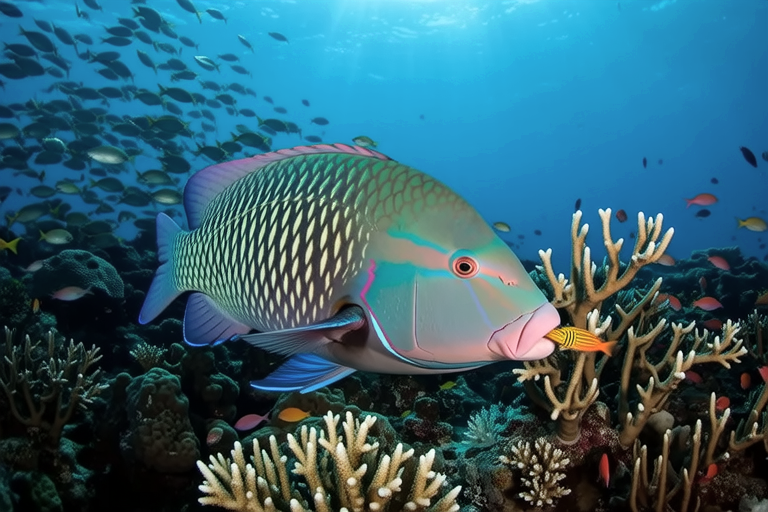
How Parrot Fish Are Changing the Game in Marine Conservation Efforts
Introduction
The vibrant and diverse world of coral reefs is not only a visual spectacle but also a crucial component of marine ecosystems. Among the many species that call these underwater habitats home, parrot fish stand out as vital players. These colorful creatures play a significant role in maintaining the health of coral reefs through their unique grazing behavior. This article delves into the ecological importance of parrot fish, their impact on algae control, the challenges they face, and the ongoing efforts to protect them.
The Ecological Role of Parrot Fish
Parrot fish are known for their striking colors and unique feeding habits. They are primarily herbivorous, feeding on algae that grow on coral reefs. Their diet consists mainly of algae and other plant matter, which they scrape off coral surfaces using their beak-like teeth. This grazing behavior is essential for maintaining the balance within the reef ecosystem. By keeping algae growth in check, parrot fish prevent it from overwhelming corals, which can lead to coral death if left unchecked. Thus, they indirectly promote coral health and growth.
Impact on Algae Control and Coral Health
The grazing activities of parrot fish have a profound impact on the overall health of coral reefs. A study published in the journal Ecology Letters found that reefs with healthy parrot fish populations exhibited lower levels of harmful algal blooms. These blooms can smother corals, reducing light availability and oxygen levels, which are critical for coral survival. By controlling algae, parrot fish ensure that corals receive sufficient sunlight and nutrients, fostering a healthier reef environment.
Moreover, the waste produced by parrot fish after digestion contributes to the formation of sand. This process, known as bioerosion, is crucial for the maintenance of reef structures. The excreted material is rich in calcium carbonate, a key component in the construction of coral skeletons. This natural recycling helps sustain the physical integrity of reefs, making them more resilient against environmental stresses such as climate change and ocean acidification.
Case Studies and Correlation Between Parrot Fish Populations and Reef Resilience
Recent studies have provided compelling evidence linking parrot fish populations to the resilience of coral reefs. In the Caribbean, for instance, researchers observed that reefs with higher densities of parrot fish experienced faster recovery rates following disturbances like hurricanes or coral bleaching events. One notable case study involved the Flower Garden Banks National Marine Sanctuary in the Gulf of Mexico. Here, scientists noted that areas where parrot fish were abundant showed greater resistance to disease outbreaks among coral colonies.
Another example comes from the Great Barrier Reef in Australia. Researchers found that reefs with thriving parrot fish populations were better able to recover from coral bleaching incidents compared to those lacking these fish. These findings underscore the critical role parrot fish play in enhancing reef resilience and promoting long-term sustainability.
Threats to Parrot Fish and Their Impact on Marine Ecosystems
Despite their importance, parrot fish populations face numerous threats that jeopardize their survival and, consequently, the health of coral reefs. Overfishing remains one of the most significant challenges. Many communities rely heavily on fishing for food and income, leading to unsustainable practices that deplete parrot fish stocks. Additionally, habitat loss due to coastal development, pollution, and climate change further exacerbates the situation.
The depletion of parrot fish populations has far-reaching consequences for marine ecosystems. Without adequate numbers of these grazers, algae can overgrow corals, leading to reduced biodiversity and decreased reef productivity. Furthermore, the decline in parrot fish populations affects other species that depend on reefs for shelter and food. This cascade effect highlights the interconnectedness of marine life and underscores the need for comprehensive conservation strategies.
Efforts to Protect Parrot Fish
Recognizing the vital role of parrot fish, various initiatives have been launched to safeguard their populations and restore balance to coral reefs. Sustainable fishing practices are at the forefront of these efforts. Many countries have implemented regulations to limit catches and protect breeding grounds, ensuring that parrot fish can reproduce and replenish depleted stocks.
Marine protected areas (MPAs) serve as another effective tool in conserving parrot fish. These designated zones provide safe havens where fishing is restricted or prohibited, allowing fish populations to thrive. For example, the creation of MPAs around certain Caribbean islands has led to noticeable increases in parrot fish numbers. Community-led conservation initiatives also play a crucial role. Local communities are often directly involved in managing and protecting their marine resources, fostering a sense of ownership and responsibility.
Experts from organizations such as the World Wildlife Fund (WWF) and the International Union for Conservation of Nature (IUCN) emphasize the importance of involving stakeholders at all levels. By collaborating with governments, NGOs, and local communities, it is possible to develop tailored solutions that address specific regional challenges while promoting global conservation goals.
Future Strategies and Broader Implications
Looking ahead, there are several promising strategies for ensuring the survival of parrot fish and enhancing marine biodiversity. Continued research into the complex interactions between parrot fish and their environment will inform more targeted conservation measures. Advances in technology, such as satellite monitoring and remote sensing, offer new ways to track population trends and identify areas requiring intervention.
Additionally, raising awareness among consumers about sustainable seafood choices can drive demand for responsibly sourced products, thereby incentivizing better fishing practices. Educational programs aimed at schools and communities can foster understanding and appreciation for marine ecosystems, encouraging individuals to take action in their daily lives.
The broader implications of preserving parrot fish extend beyond individual species. Healthy coral reefs support countless other organisms and contribute significantly to global biodiversity. They act as nurseries for juvenile fish, provide essential habitats for marine mammals, and serve as buffers against storm surges. Moreover, coral reefs are economically valuable, supporting tourism industries and providing livelihoods for millions worldwide.
Conclusion
In conclusion, parrot fish are indispensable contributors to the well-being of coral reefs and marine ecosystems. Their grazing behavior plays a pivotal role in controlling algae growth and promoting coral health, ultimately enhancing reef resilience. However, threats such as overfishing and habitat loss pose serious challenges to their survival. Through concerted efforts involving sustainable fishing practices, marine protected areas, and community engagement, we can work towards securing the future of parrot fish and ensuring the continued vitality of our oceans.
By supporting marine conservation efforts and advocating for responsible stewardship of our seas, we can make a tangible difference. Let us embrace the opportunity to protect parrot fish and preserve the beauty and diversity of our planet’s underwater realms for generations to come.
