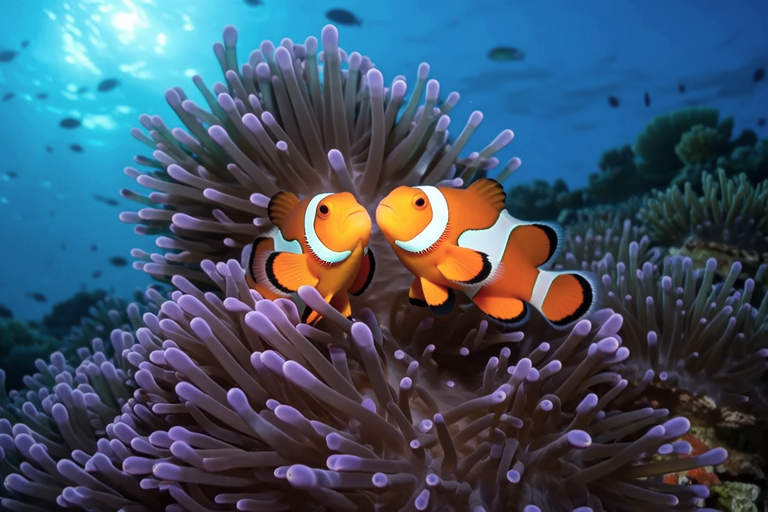
Clownfish Companionship: How These Colorful Creatures Thrive with Anemones
Clownfish, or anemonefish, are among the most recognizable marine creatures, known for their vibrant colors and symbiotic relationship with sea anemones. These fish belong to the family Pomacentridae and the subfamily Amphiprioninae, comprising 30 recognized species. Each species has its own distinct habitat preferences and characteristics, making them fascinating subjects for both marine biologists and aquarists.
Diversity of Clownfish Species and Natural Habitats
Clownfish species vary widely in coloration and size. The common clownfish (Amphiprion ocellaris), also known as the false clownfish, is one of the most popular due to its iconic orange body with white stripes. Other species include the tomato clownfish (Amphiprion frenatus) and the percula clownfish (Amphiprion percula). These species are found primarily in the tropical waters of the Indian and Pacific Oceans, particularly around coral reefs and lagoons.
The natural habitats of clownfish are crucial to understanding their behavior and survival. They inhabit coral reefs, which provide shelter, breeding grounds, and a diverse ecosystem. Clownfish thrive in areas with abundant sea anemones, which are essential for their survival. Anemones offer protection from predators and serve as a source of food. The symbiotic relationship between clownfish and anemones is one of the most studied in marine biology, offering insights into coexistence and mutualism in the ocean.
Symbiotic Relationship Between Clownfish and Anemones
The relationship between clownfish and anemones is a prime example of mutualism, where both organisms benefit from the association. Clownfish receive protection from predators, including larger fish, and are shielded from the stinging tentacles of the anemone. In return, clownfish provide food for the anemone by bringing it small particles of plankton and detritus. Additionally, clownfish may stimulate the anemone’s tentacles, potentially increasing water flow and nutrient delivery.
This partnership is facilitated by a unique layer of mucus that covers the clownfish’s skin. This mucus protects the fish from the anemone’s stinging cells, known as nematocysts. Over time, clownfish have evolved to produce a substance that inhibits the firing of these cells, allowing them to live among the anemones without harm. This adaptation underscores the complexity of the relationship and highlights the evolutionary advantages of mutualism.
Selecting Specific Anemone Species as Partners
Clownfish are selective about the anemone species they associate with. They typically choose from a limited number of species, such as the Heteractis magnifica, Stichodactyla gigantea, and Entacmaea quadricolor. The choice of partner is influenced by factors such as the size, location, and availability of the anemone. Clownfish often display aggressive behavior towards other clownfish species when competing for the same anemone, reinforcing the importance of territoriality in maintaining this relationship.
The process of selecting an anemone involves a series of tests. Clownfish will swim around potential partners, touching the tentacles with different parts of their bodies to assess the level of protection offered. Once satisfied, they will begin to establish themselves in the chosen anemone, gradually acclimating to the presence of the tentacles. This initial interaction is critical, as it sets the foundation for the long-term symbiosis.
Protective Mechanisms Developed by Clownfish
Once established in their anemone home, clownfish develop several protective mechanisms. One notable behavior is the cleaning of the anemone’s tentacles. By removing debris and dead tissue, clownfish help maintain the health and efficiency of the anemone’s tentacles, which play a crucial role in capturing prey. This cleaning behavior not only benefits the anemone but also reinforces the bond between the two organisms.
Another important aspect of this relationship is the clownfish’s role in deterring potential threats. Clownfish are highly territorial and will defend their anemone against intruders. They use visual displays, vocalizations, and physical confrontations to protect their territory, ensuring the safety of both themselves and their anemone partner. This behavior underscores the mutualistic nature of their relationship, where both parties benefit from the defense efforts.
Unique Behaviors Within the Partnership
In addition to protection and cleaning, clownfish exhibit unique behaviors that contribute to the success of their symbiotic relationship. One such behavior is the sharing of food resources. Clownfish bring small particles of plankton and detritus to the anemone, which the anemone can then consume. This exchange of nutrients ensures that both organisms have access to a steady supply of food, even during periods of scarcity.
Clownfish also engage in a behavior known as “fanning.” By swimming near the anemone’s tentacles, they create a current that helps circulate water and nutrients. This behavior is believed to enhance the anemone’s ability to capture prey and absorb nutrients, further benefiting both partners. The intricate dance of cooperation between clownfish and anemones demonstrates the complexity and beauty of marine ecosystems.
Maintaining Companionship in Aquarium Settings
Replicating the natural conditions of clownfish-anemone partnerships in aquariums requires careful consideration. To ensure the well-being of both organisms, it is essential to provide a suitable environment that mimics their natural habitat. This includes maintaining appropriate water temperature, salinity, and pH levels. Additionally, providing ample hiding spaces and ensuring a consistent supply of food are crucial for the health and happiness of the fish.
When selecting anemones for an aquarium, it is important to choose species that are compatible with the specific clownfish species. Some anemones are more sensitive than others and may not survive in certain tank conditions. Regular monitoring of water quality and the health of both the clownfish and the anemone is necessary to prevent disease and stress. Providing a balanced diet and ensuring proper lighting are also key factors in maintaining a healthy symbiotic relationship.
In conclusion, the companionship between clownfish and anemones is a testament to the wonders of marine life. Through their mutualistic relationship, these colorful creatures thrive in ways that highlight the interconnectedness of the ocean’s ecosystem. By understanding and replicating the conditions that support this partnership, we can ensure the well-being of both organisms in aquarium settings. The study of clownfish-anemone relationships continues to offer valuable insights into the complex world of marine biology, inspiring further research and conservation efforts.
