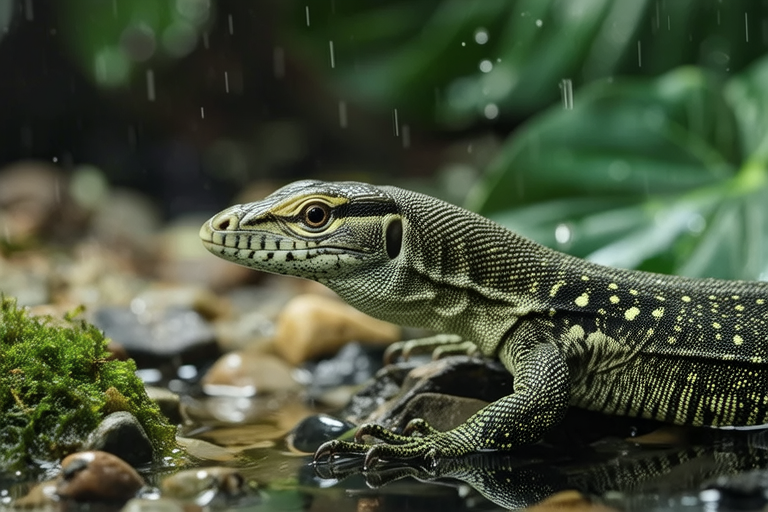
From Jungle to Home: The Ultimate Guide to Owning a Water Monitor
Water monitors (Varanus salvator) are some of the most impressive reptiles you can own. These semi-aquatic lizards are native to parts of Asia, where they thrive in diverse habitats ranging from mangrove swamps to freshwater rivers. Owning a water monitor requires a significant commitment due to their size, lifespan, and specific care requirements. This guide will walk you through everything you need to know about bringing a water monitor into your home.
Understanding Water Monitors’ Natural Habitat
Native to Southeast Asia, water monitors inhabit areas rich in vegetation, including tropical rainforests, mangroves, and freshwater bodies like rivers, lakes, and ponds. They are highly adaptable and can be found in various environments, from coastal regions to inland forests. In the wild, these lizards are skilled swimmers, capable of diving and staying submerged for extended periods. They also spend time basking on rocks or tree branches, which helps them regulate their body temperature. Understanding their natural habitat is crucial for replicating an appropriate environment in captivity.
Dietary Needs
Water monitors are carnivorous and have a varied diet in the wild, consisting of small mammals, birds, fish, insects, and even other reptiles. In captivity, they require a balanced diet that mimics their natural feeding habits. Juvenile water monitors benefit from smaller prey items like crickets, mealworms, and pinky mice. As they grow, their diet should expand to include larger prey, such as adult mice, rats, and fish. It’s important to offer a variety of food to ensure they receive all necessary nutrients. Feeding frequency depends on the lizard’s age and size; younger water monitors may eat daily, while adults can be fed every few days.
Housing Requirements
Providing adequate space is paramount when keeping a water monitor. A young water monitor can start in a 4 x 2 x 2-foot enclosure, but as it grows, it will need significantly more room. An adult water monitor typically requires a minimum enclosure size of 8 x 4 x 4 feet. The enclosure should have a substantial water area, allowing the lizard to swim freely. The depth of the water should be at least half the length of the monitor to allow for full submersion. Land areas should be spacious enough for the lizard to bask and move around comfortably.
The substrate should be easy to clean and maintain. Cypress mulch or reptile-safe bark chips are popular choices. Avoid substrates that could cause impaction if ingested, such as sand or gravel. Proper lighting is essential for the health of your water monitor. UVB lighting simulates sunlight and aids in calcium absorption. Basking lights are also necessary to create a warm spot where the lizard can thermoregulate. The basking area should reach temperatures between 95-100°F, while the cooler side of the enclosure should remain around 75-80°F.
Health Care Essentials
Maintaining good health in a water monitor involves regular veterinary check-ups and proper husbandry. Regular visits to a reptile-savvy veterinarian can help catch potential health issues early. Common health problems in water monitors include respiratory infections, parasites, and metabolic bone disease. Ensuring the enclosure’s cleanliness, providing appropriate lighting, and maintaining correct humidity levels are vital for preventing these issues. Regularly cleaning the enclosure and changing the water will help keep your monitor healthy.
Behavioral Insights
Water monitors are intelligent and curious animals, often displaying complex behaviors. They can learn to recognize their caretakers and respond to stimuli. However, they are also strong and powerful, capable of delivering painful bites and scratches. It’s essential to handle your water monitor with care and respect. Young water monitors are generally more docile, but as they mature, they may become more aggressive. Training and handling should be done consistently and gently to build trust. Providing environmental enrichment, such as climbing structures and hiding spots, can help reduce stress and promote positive behavior.
Tips for Creating a Safe and Enriching Environment at Home
Creating a safe and enriching environment for your water monitor involves several key considerations. First, ensure that all enclosures and accessories are secure and escape-proof. Water monitors are excellent climbers and swimmers, so any gaps or weak points in the enclosure can lead to escapes. Second, provide a variety of enrichment opportunities, such as floating logs, rocks, and plants, to stimulate their natural instincts. Lastly, establish a routine for feeding, cleaning, and handling to minimize stress for both you and your monitor.
Commitment Required
Owning a water monitor is a serious commitment. These lizards can live up to 20 years or more, and they require significant time, effort, and financial investment. They grow rapidly, reaching lengths of 6-8 feet within a few years. The cost of purchasing a water monitor, along with the ongoing expenses for food, supplies, and veterinary care, can be considerable. Potential owners should thoroughly research and prepare themselves before bringing a water monitor into their home.
Resources for Further Learning
For those interested in learning more about water monitors, there are numerous resources available. Books, online forums, and local herpetological societies can provide valuable information and support. Some recommended books include ‘The Water Monitor: The World’s Largest Lizard’ by Richard Gibson and ‘The Complete Guide to Keeping and Breeding Reptiles’ by David Alderton. Additionally, joining online communities dedicated to reptile care can connect you with experienced owners who share knowledge and advice.
