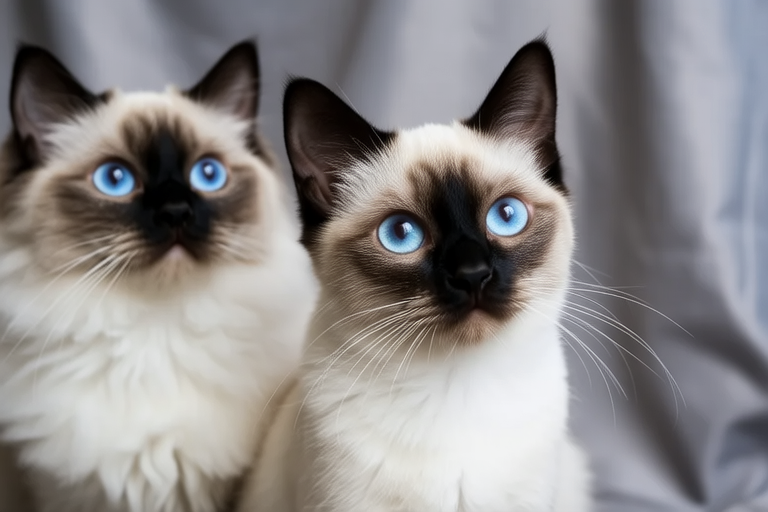
Unique Characteristics of Siamese Cats: The Mystery Behind Their Striking Blue Eyes
Introduction:
The Siamese cat is one of the most recognizable and beloved feline breeds in the world. Known for their sleek, svelte bodies, pointed ears, and expressive almond-shaped eyes, these cats have captured the hearts of many pet owners. However, what truly sets Siamese cats apart is their striking blue eyes, which are often described as mesmerizing and captivating. In this article, we will delve into the unique characteristics of Siamese cats, focusing on their iconic blue eyes. We will explore the genetic factors responsible for this trait, including the role of temperature-sensitive pigmentation, and discuss how the expression of blue eyes in Siamese cats is influenced by specific genes. Additionally, we will provide scientific insights into ocular pigmentation and its variation among different cat breeds, compare and contrast the eye color genetics of Siamese cats with other breeds, and include historical context about Siamese cats and their origins.
Historical Context and Origins of Siamese Cats
The history of Siamese cats can be traced back to ancient Siam, now known as Thailand. These elegant felines were revered in their native land and were often kept in royal palaces, where they were considered sacred and were believed to bring good fortune. According to legend, Siamese cats were entrusted with the task of guarding valuable objects, such as the royal scepter, by wrapping their tails around them. It was said that the cats’ dedication to their duty caused their paws to turn black from constant contact with the precious items.
Siamese cats first arrived in Europe and North America in the late 19th century, when they were brought as gifts to Western diplomats and travelers. They quickly gained popularity for their distinctive appearance and charming personalities. Today, Siamese cats are one of the most popular breeds in the world, and their striking blue eyes have become one of their most recognizable features.
Genetic Factors Responsible for Blue Eyes in Siamese Cats
The striking blue eyes of Siamese cats are the result of a fascinating genetic phenomenon known as temperature-sensitive pigmentation. This process involves the production of melanin, the pigment responsible for giving color to skin, hair, and eyes. In Siamese cats, the enzyme responsible for producing melanin, tyrosinase, is temperature-sensitive. At normal body temperatures, this enzyme is inactive, preventing the production of melanin in areas like the face, paws, and tail, which are cooler than the rest of the body. As a result, these areas remain light in color, while the warmer parts of the body, such as the abdomen and inner thighs, develop darker fur.
In the case of the eyes, the lack of melanin production leads to the development of blue irises. Without sufficient amounts of melanin, light is scattered within the iris, causing it to appear blue. This phenomenon is known as Rayleigh scattering, which is also responsible for the blue color of the sky. The absence of melanin in the eyes of Siamese cats is further accentuated by the presence of a layer of tissue behind the iris called the tapetum lucidum. This reflective layer enhances the cat’s night vision but also intensifies the blue color of the eyes.
Specific Genes Influencing Eye Color in Siamese Cats
The expression of blue eyes in Siamese cats is primarily influenced by two specific genes: the C gene, which controls coat color, and the B gene, which affects eye color. The C gene has several alleles, each of which produces a different coat pattern. The dominant allele, C, allows for full pigmentation, resulting in solid-colored coats. However, the recessive allele, c, causes temperature-sensitive pigmentation, leading to the characteristic pointed coat pattern seen in Siamese cats.
The B gene, on the other hand, determines the amount of brown pigment (eumelanin) present in the eyes. The dominant allele, B, produces brown or black eyes, while the recessive allele, b, results in green or blue eyes. In Siamese cats, both the c and b alleles must be present for the blue-eyed, pointed coat pattern to develop. When these alleles combine, they create a unique genetic signature that gives rise to the striking blue eyes and distinct coat patterns seen in Siamese cats.
Scientific Insights into Ocular Pigmentation and Its Variation Among Different Cat Breeds
Ocular pigmentation, or the coloration of the eyes, is a complex trait that is influenced by multiple genetic and environmental factors. In addition to the temperature-sensitive pigmentation seen in Siamese cats, other factors can also affect eye color in cats. For example, certain mutations in the ASIP gene, which regulates the production of agouti signaling protein, can cause variations in coat and eye color. These mutations can lead to the development of green, hazel, or yellow eyes in some cat breeds.
Furthermore, the interaction between different genes can produce a wide range of eye colors in cats. For instance, the EPD1 gene, which controls the distribution of pigment cells during embryonic development, can influence the overall pigmentation of the eyes. Mutations in this gene can lead to the development of heterochromia, a condition where the eyes are different colors. Heterochromia is relatively rare in cats but has been observed in some breeds, such as Turkish Van and Turkish Angora cats.
While the blue eyes of Siamese cats are undoubtedly striking, other cat breeds exhibit a variety of eye colors. For example, British Shorthair cats often have green or gold eyes, while Russian Blue cats typically have emerald-green eyes. The variation in eye color among different cat breeds highlights the complexity of ocular pigmentation and the numerous genetic factors that contribute to this trait.
Comparison and Contrast of Eye Color Genetics Between Siamese Cats and Other Breeds
When comparing the eye color genetics of Siamese cats with other breeds, it becomes apparent that the temperature-sensitive pigmentation seen in Siamese cats is relatively unique. Most other cat breeds rely on different genetic mechanisms to produce their characteristic eye colors. For example, the green or gold eyes of British Shorthair cats are the result of mutations in the ASIP gene, which regulate the production of agouti signaling protein. These mutations cause the development of green or gold eyes in these cats, without the need for temperature-sensitive pigmentation.
In contrast, the blue eyes of Siamese cats are the result of both temperature-sensitive pigmentation and the presence of the b allele at the B locus. This combination of genetic factors gives rise to the striking blue eyes seen in Siamese cats and sets them apart from other breeds. While some other breeds, such as Turkish Van and Turkish Angora cats, may also have blue eyes, the mechanism behind this trait is different and does not involve temperature-sensitive pigmentation.
It is worth noting that the expression of blue eyes in Siamese cats is highly consistent, with almost all individuals of this breed exhibiting this trait. In contrast, the expression of blue eyes in other breeds, such as Turkish Van and Turkish Angora cats, is less consistent and may vary depending on the individual’s genetic makeup. This variability in eye color expression highlights the complexity of ocular pigmentation and the numerous genetic factors that can influence this trait.
Conclusion
The striking blue eyes of Siamese cats are a testament to the intricate and fascinating world of genetics. Through temperature-sensitive pigmentation and the interaction of specific genes, these cats have developed one of the most recognizable and captivating features in the animal kingdom. While the blue eyes of Siamese cats are unique, they are part of a broader spectrum of ocular pigmentation seen in different cat breeds. By understanding the genetic factors responsible for eye color in cats, we gain insight into the complexity of inheritance and the numerous factors that shape the diversity of our feline companions.
As we continue to study the genetics of cat breeds, we can expect to uncover even more about the mechanisms behind ocular pigmentation and the factors that influence this trait. Whether you are a cat lover, a breeder, or simply curious about the science behind genetics, the study of eye color in cats offers a window into the wonders of nature and the endless possibilities of inheritance.
