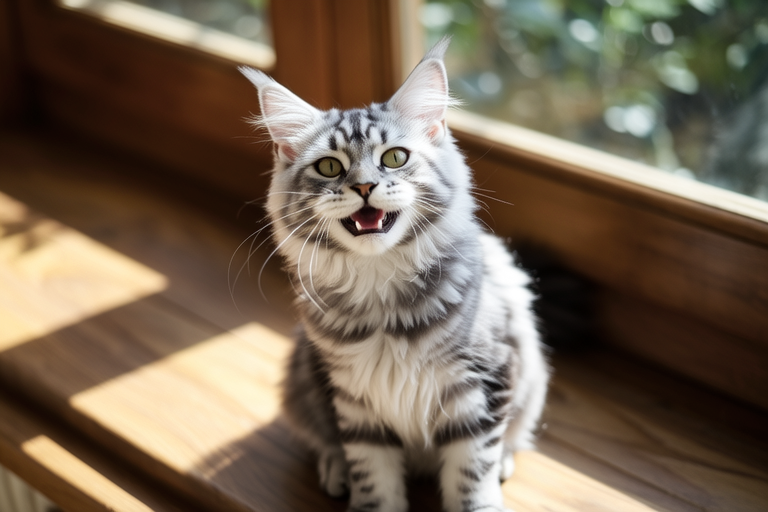
Unraveling the Mystery Behind the Maine Coon’s Giggling Giggle
Welcome, fellow cat enthusiasts! Today, we delve into the fascinating world of one of the most beloved cat breeds: the Maine Coon. Known for their striking appearance and gentle demeanor, these felines also have a unique vocalization that has intrigued many: the giggling giggle. This article will explore the origins, frequency, and reasons behind this charming sound, providing insights for both new and experienced cat owners.
The Origins of the Maine Coon’s Giggling Giggle
The Maine Coon’s giggling giggle has been a subject of curiosity for centuries. Originating from the northeastern United States, where they were bred as working cats, these large, sociable creatures developed distinct communication methods. Historians and breeders speculate that the giggle may have evolved as a way for Maine Coons to communicate with their human companions and other animals in their environment. The exact origin remains a mystery, but it’s clear that this vocalization is deeply embedded in the breed’s heritage.
Frequency Among Different Maine Coons
Not all Maine Coons exhibit the giggling giggle, but those who do often display it at various times. Some cats giggle frequently, especially during play or when they’re excited, while others may only giggle occasionally, perhaps in response to certain stimuli. Breeders and veterinarians have noted that the frequency can vary widely within the breed, making it a unique trait that adds to the individuality of each Maine Coon.
Potential Reasons Behind the Giggling Giggle
Genetics
One of the primary factors contributing to the giggling giggle is likely genetic. Studies suggest that specific genes responsible for vocalization patterns are passed down through generations. Maine Coons that have parents or grandparents known for their giggles are more likely to inherit this trait. Genetic testing has yet to pinpoint the exact gene responsible, but ongoing research continues to shed light on this intriguing phenomenon.
Environmental Factors
In addition to genetics, environmental factors play a significant role in shaping a Maine Coon’s behavior. Cats raised in stimulating environments, with plenty of interaction and play, tend to vocalize more, including giggling. Conversely, cats living in quieter, less interactive settings may giggle less frequently. Socialization during kittenhood appears to be particularly influential in developing and maintaining this vocal behavior.
Anecdotes and Studies
Many anecdotes from cat owners describe their Maine Coons’ giggles as delightful and endearing. One owner, Sarah, recalls her cat, Whiskers, giggling whenever she opened the door to let him outside. Another, Tom, mentions his cat, Luna, who giggles during playtime with her toys. These stories highlight the variability and charm of the giggle.
Scientific studies have also explored the giggle. Researchers at a leading veterinary school conducted a study observing Maine Coons in various environments. They found that cats in social, interactive settings exhibited the giggle more frequently than those in solitary conditions. This finding supports the theory that environmental factors significantly influence the giggle’s expression.
Tips for Owners
If your Maine Coon has started giggling, you’re likely wondering what it means and how to respond. Here are some tips to help you understand and engage with your cat:
- Observe the Context: Pay attention to when your cat guffaws. Is it during play, mealtime, or in response to certain people or sounds? Understanding the context can provide valuable insights into your cat’s emotional state.
- Engage in Play: Maine Coons are playful creatures. Interactive toys and games can stimulate their minds and bodies, potentially increasing their giggles.
- Create a Stimulating Environment: Providing a variety of toys, scratching posts, and climbing structures can keep your cat engaged and happy, possibly enhancing their vocal expressions.
Encouraging or Discouraging the Giggles
Depending on your preferences, you may wish to encourage or discourage your Maine Coon’s giggles. Here’s how:
To Encourage Giggles
- Play Sessions: Regular playtimes can reinforce positive associations with the giggle. Choose toys that mimic prey, such as feather wands or laser pointers.
- Positive Reinforcement: Reward your cat with treats or praise when they giggle. This can help strengthen the behavior.
To Discourage Giggles
- Ignore the Behavior: If the giggles occur at inconvenient times, try ignoring them. Cats may stop if they don’t receive attention.
- Redirect Attention: Offer a toy or treat to redirect your cat’s focus away from the giggle-inducing stimulus.
Conclusion
The Maine Coon’s giggling giggle is a charming and unique aspect of their character. While the exact origins remain somewhat mysterious, understanding the genetic and environmental factors contributing to this behavior can enhance your relationship with your cat. By observing and engaging with your Maine Coon, you can better appreciate this delightful vocalization and tailor your interactions accordingly. Whether you choose to encourage or discourage the giggles, remember that each Maine Coon brings something special to the table, and their quirks are part of what makes them so endearing.
