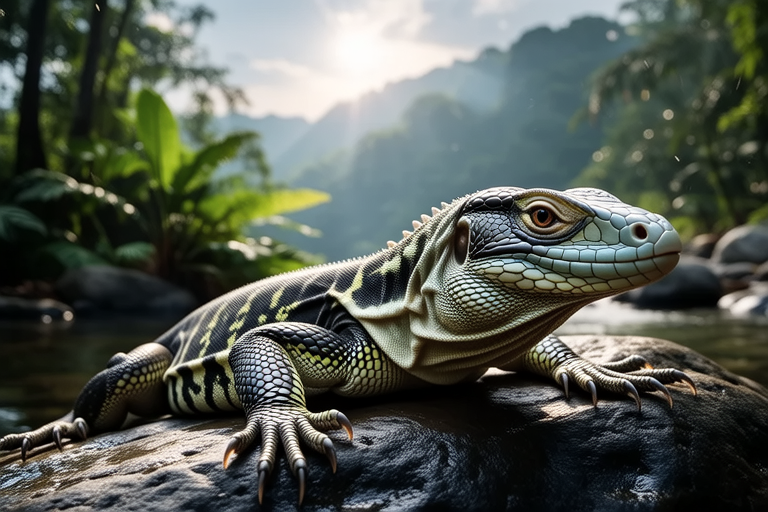
Myths and Realities Surrounding Water Monitors
The water monitor (Varanus salvator) is one of the largest lizards in the world, native to Southeast Asia. Known for their impressive size and adaptability, these creatures have captured the imagination of many, leading to a plethora of myths and misconceptions. This article aims to explore the myths and realities surrounding water monitors, providing a comprehensive overview of their native habitats, physical characteristics, behavior, lifecycle, and conservation status.
Native Habitats and Physical Characteristics
Water monitors can be found in a variety of environments across their native range, including mangrove swamps, rivers, lakes, and coastal areas. They are highly adaptable and can thrive in both freshwater and saltwater habitats. Their natural distribution spans from India through Southeast Asia, encompassing countries like Indonesia, Malaysia, Thailand, and parts of China. The ability to swim and dive makes them adept at navigating aquatic environments, which is reflected in their name.
Physically, water monitors are strikingly impressive. Adults can reach lengths of up to 3 meters (9.8 feet) and weigh as much as 50 kilograms (110 pounds). Their long bodies are supported by powerful limbs, and they possess a long, muscular tail that serves multiple purposes, such as swimming propulsion and defense. The skin is covered in scales that vary in color from olive green to black, often with yellow or cream spots, which provide excellent camouflage in their natural habitat.
Common Myths and Scientific Facts
Aggression
One of the most prevalent myths about water monitors is their extreme aggression towards humans. While it’s true that water monitors can become defensive when threatened, their aggression is often exaggerated. In reality, these animals are generally shy and will avoid confrontation whenever possible. However, they may bite or lash out if cornered or provoked, especially by smaller animals or children who might mistake their movements for playfulness.
Scientific studies have shown that water monitors are more likely to flee than fight. Their primary goal is survival, and they use their agility and speed to escape predators rather than engage in combat. It’s important to approach any wild animal with caution and respect, but there’s no need to fear water monitors unless you pose a direct threat to them.
Diet
Another common misconception is that water monitors have a voracious appetite, consuming anything they can catch, including small pets and livestock. While it’s true that their diet is varied, consisting of fish, frogs, insects, birds, and even carrion, they are opportunistic feeders rather than indiscriminate hunters. Their diet reflects the availability of prey in their environment, and they play a crucial role in maintaining ecological balance.
Research indicates that water monitors help control populations of pests and invasive species. By preying on rodents and insects, they contribute to the health of their ecosystems. Despite their reputation, they rarely target domestic animals, and reports of attacks on humans are extremely rare. Their diet is a testament to their adaptability and resourcefulness, allowing them to survive in diverse environments.
Intelligence
Water monitors are often described as intelligent, and while this claim has some basis in fact, it’s important to understand what constitutes intelligence in reptiles. Studies suggest that water monitors possess problem-solving abilities and can learn from experience. For example, they have been observed using tools, such as sticks, to dig for food or access hard-to-reach prey. They also exhibit social behaviors, such as cooperative hunting, which further underscores their cognitive capabilities.
However, it’s crucial to contextualize their intelligence within the framework of reptilian cognition. Unlike mammals, reptiles don’t engage in complex social interactions or display the same level of emotional intelligence. Their intelligence is primarily focused on survival, and their behaviors are driven by instinct and learned responses to environmental stimuli. Understanding this helps dispel the myth of water monitors being exceptionally intelligent in the human sense.
Behavior and Lifecycle
Water monitors are diurnal, meaning they are most active during the day. They spend much of their time basking in the sun to regulate their body temperature, which is essential for their metabolism. Their daily routine involves hunting, foraging, and exploring their territory, which can span several kilometers. Males are particularly territorial and may engage in combat with other males during the breeding season.
The mating season typically occurs during the wet season, which varies depending on the region. After successful mating, females lay clutches of eggs, usually between 10 to 60, in nests dug into the ground or hidden in vegetation. Incubation lasts approximately 6 to 8 months, and the hatchlings are independent from birth. Juvenile water monitors are miniature versions of adults, though they are more vulnerable to predation due to their smaller size.
Conservation Status
Despite their widespread distribution, water monitors face numerous threats, including habitat loss, hunting, and the pet trade. Deforestation and urbanization have reduced their natural habitats, making it harder for them to find suitable nesting sites and prey. Additionally, water monitors are hunted for their meat and skins, which are considered delicacies and luxury items, respectively. The pet trade also poses a significant risk, as many individuals are captured and sold illegally.
Conservation efforts are underway to protect water monitors and their habitats. Organizations and governments are working together to establish protected areas, enforce anti-poaching laws, and promote sustainable practices. Education campaigns aim to raise awareness about the importance of these animals in their ecosystems and the consequences of their exploitation. By supporting these initiatives, we can help ensure the survival of water monitors for future generations.
Advice for Interaction and Observation
If you’re interested in observing water monitors in their natural environment, it’s essential to do so responsibly. Avoid disturbing them or their habitats, and never attempt to capture or harm them. Instead, observe from a safe distance, using binoculars or a camera with a zoom lens. Respecting their space allows you to appreciate their beauty and behavior without causing undue stress.
For those considering keeping water monitors as pets, it’s important to research thoroughly and consult experts before making a decision. These animals require specialized care, including appropriate housing, diet, and medical attention. Responsible ownership means providing a stimulating and enriching environment that mimics their natural habitat as closely as possible. Additionally, check local regulations regarding exotic pets to ensure compliance with legal requirements.
In conclusion, water monitors are fascinating creatures with many myths surrounding their aggression, diet, and intelligence. By understanding the realities behind these misconceptions, we can appreciate their unique place in nature and work towards their conservation. Whether you’re an observer or a responsible owner, respecting water monitors ensures their continued existence and contributes to the preservation of biodiversity.
