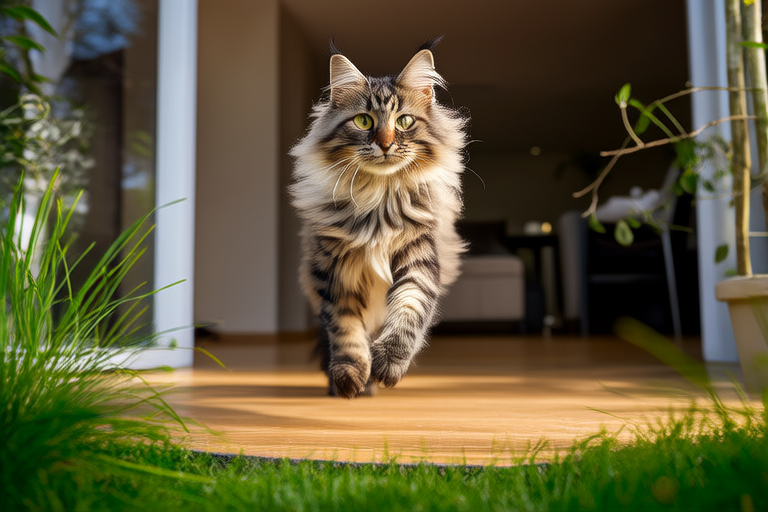
From Forests to Living Rooms: The Journey of the Maine Coon
The Maine Coon is one of the most fascinating and beloved cat breeds in the world. With a history deeply rooted in the dense forests of North America, this breed has evolved from wild forest dwellers to cherished household pets. This article explores the origins, myths, evolution, and future of the Maine Coon, offering insights into what makes this breed so special.
Origins in the Dense Forests of North America
The Maine Coon’s journey begins in the rugged landscapes of New England, where they adapted to survive harsh winters and challenging terrains. These felines developed long, thick fur coats that protected them from cold temperatures, and large paws that served as natural snowshoes, aiding in navigation through deep snow. Their tufted ears and tails provided additional insulation, while their strong, muscular bodies enabled them to hunt effectively.
The Maine Coon’s natural environment demanded adaptability. They were adept at climbing trees to escape predators and perching high for a better vantage point. Their keen sense of hearing and sight allowed them to detect prey from great distances, making them skilled hunters. Their powerful hind legs gave them the agility to leap and pounce with precision. In the wild, these traits were essential for survival, but they also contributed to the breed’s charm and grace once domesticated.
Mythological Tales Surrounding Its Origins
The origins of the Maine Coon are shrouded in mystery and folklore. One of the most enduring legends suggests that the breed descended from long-haired cats owned by Marie Antoinette. According to the tale, the French queen attempted to flee France during the revolution and entrusted her six Turkish Angora cats to a sea captain named Samuel Clough. Clough supposedly smuggled the cats to his home in Wiscasset, Maine, where they bred with local short-haired cats, creating the Maine Coon.
Another myth attributes the breed’s origin to the Norsemen, who brought their semi-longhaired cats to North America. These cats interbred with native felines, resulting in the Maine Coon. While these stories add a touch of romance to the breed’s history, there is no concrete evidence to support them. However, they highlight the breed’s mysterious and captivating heritage.
Evolution from Wild Forest Dwellers to Domestic Pets
As settlers moved into the New England region, they brought their domestic cats with them. Over time, these cats interbred with the wild Maine Coons, leading to the development of the breed we know today. The transition from wild forest dwellers to domestic pets was gradual and marked by several significant changes.
Behaviorally, Maine Coons became more social and less territorial. Their natural hunting instincts remained intact, but they learned to coexist with humans and other animals. This change in behavior made them ideal companions for families. Physically, their appearance softened, with rounded heads replacing angular features, and their coats becoming more luxurious. Their temperament also evolved, becoming more gentle and affectionate.
One of the most notable changes was in their vocalization. Maine Coons are known for their distinctive chirping sounds, which they use to communicate with their human companions. This trait, combined with their playful and curious nature, made them increasingly popular as pets. Their intelligence also played a crucial role in their domestication, as they quickly learned to interact with humans and respond to training.
Characteristics That Make the Maine Coon Popular Today
Today, the Maine Coon is one of the most popular cat breeds, thanks to its unique combination of physical attributes and personality traits. Their striking appearance, with their long, flowing coats, tufted ears, and bushy tails, is unmistakable. Their size is another defining feature; Maine Coons are among the largest domestic cat breeds, often weighing between 9 to 18 pounds.
But it’s not just their looks that endear them to cat enthusiasts. Maine Coons are known for their friendly and sociable nature. They enjoy the company of their human families and other pets, making them excellent companions. Their intelligence sets them apart from many other breeds; they can be trained to play fetch and even walk on a leash. This intelligence also means they are quick learners, often picking up new tricks and commands with ease.
Despite their size, Maine Coons are generally calm and gentle, making them perfect for households with children or other pets. They are also relatively low-maintenance when it comes to grooming, requiring only regular brushing to keep their coats tangle-free. Their robust health and longevity also contribute to their popularity, with many Maine Coons living into their late teens or early twenties.
The Future of the Maine Coon
The future of the Maine Coon looks bright, with continued interest in the breed from both cat lovers and breeders. Advances in veterinary medicine and breeding practices are helping to ensure the health and longevity of the breed. Responsible breeding practices are also playing a crucial role in maintaining the breed’s genetic diversity and reducing the risk of inherited diseases.
As more people discover the joys of owning a Maine Coon, the demand for these cats is likely to increase. Breeders will need to focus on producing healthy, well-socialized kittens while preserving the breed’s unique characteristics. Educating potential owners about proper care and maintenance will also be essential to ensure that these cats thrive in their new homes.
In conclusion, the Maine Coon’s journey from the dense forests of North America to the comfort of living rooms worldwide is a testament to their adaptability and charm. From their natural survival skills to their endearing personalities, these cats have captured the hearts of millions. As we look to the future, it’s clear that the Maine Coon will continue to be a beloved companion for generations to come.
