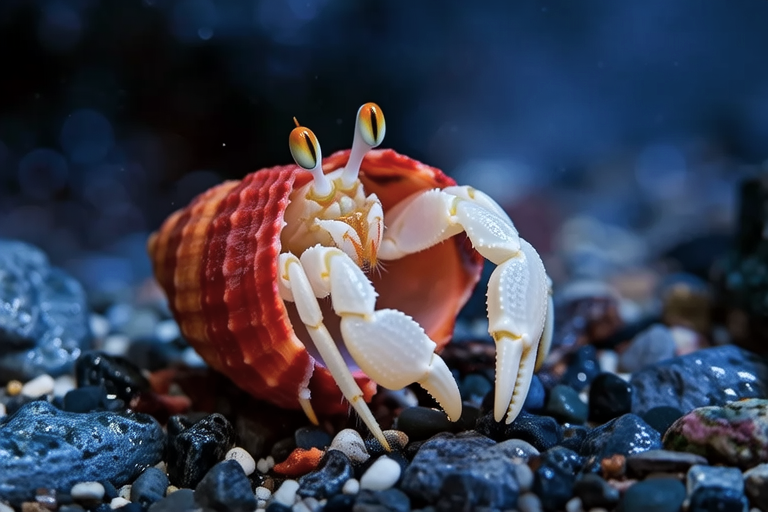
The Intrigued World of Pea Crabs
Pea crabs, members of the Pinnotheridae family, are tiny crustaceans that lead a fascinating life within the gill cavities of their hosts, primarily mussels and clams. These minuscule creatures are not only remarkable for their diminutive size but also for their complex lifecycle and symbiotic relationships. This article delves into the unique aspects of pea crabs, exploring their anatomy, behavior, and the challenges they face in their environment.
Anatomy and Size
Pea crabs are among the smallest true crabs, typically measuring less than half an inch in length. Their carapace is soft and oval-shaped, allowing them to fit snugly inside the gill chambers of their hosts. Despite their petite size, these crabs possess all the necessary appendages for survival, including claws, legs, and mouthparts. The females are slightly larger than males, which aids in reproduction by providing ample space for carrying eggs.
Lifecycle and Reproduction
The lifecycle of pea crabs begins when larvae, known as zoeae, hatch from eggs and enter the planktonic stage. They drift through the water column, feeding on phytoplankton until they reach a suitable host. Once inside, the larvae undergo metamorphosis, developing into juvenile crabs. At this stage, they attach themselves firmly to the gills of their host, where they will spend the rest of their lives.
Pea crabs reproduce sexually, with the male fertilizing the female’s eggs internally. The females carry the fertilized eggs under their bodies until they hatch. This reproductive strategy ensures that the offspring are born in a protected environment, increasing their chances of survival.
Symbiotic Relationships
Pea crabs have established a mutualistic relationship with their hosts, benefiting both parties. The crabs gain protection from predators and a constant supply of food particles that flow through the host’s gills. In return, the crabs may help filter out parasites and provide nutrients to the host’s tissues through their waste products.
Interestingly, some species of pea crabs have evolved to be so well-adapted to their hosts that they can no longer survive outside of them. This extreme specialization highlights the intricate nature of their symbiotic relationship.
Cultural and Historical Significance
While pea crabs may seem insignificant in the grand scheme of marine life, they have played a role in human culture. In some coastal communities, these crabs are considered a delicacy and are harvested for consumption. Additionally, their unique lifestyle has captured the imagination of scientists and nature enthusiasts alike, inspiring further research into the complexities of marine ecosystems.
Anatomical Adaptations
To thrive within the confines of their host’s gill cavity, pea crabs have developed several anatomical adaptations. Their flattened bodies allow them to maneuver through narrow spaces, while their long, flexible legs enable them to grasp onto the host’s tissues. The crabs also possess specialized sensory structures that help them detect changes in their environment, such as the presence of food or danger.
Behavioral Adaptations
Living within a confined space requires certain behavioral adjustments. Pea crabs have adapted to conserve energy by reducing their activity levels and relying on their hosts for sustenance. They have also developed strategies to avoid being expelled by their hosts, such as attaching themselves firmly and avoiding areas that could cause discomfort.
Threats and Conservation Efforts
Despite their widespread distribution, pea crabs face several threats to their survival. Habitat destruction, pollution, and overfishing of their hosts can all impact their populations. Additionally, climate change may alter the availability of suitable hosts and disrupt the delicate balance of their ecosystems.
Conservation efforts focus on protecting the habitats of pea crabs and their hosts, promoting sustainable fishing practices, and raising awareness about the importance of these tiny creatures in marine ecosystems. By preserving the environments in which pea crabs live, we can ensure the continued existence of these fascinating animals.
Conclusion
The world of pea crabs is a testament to the wonders of marine biology and the intricate relationships that exist within our oceans. From their microscopic size to their unique lifecycle and symbiotic partnerships, these crabs offer a captivating glimpse into the hidden corners of the underwater world. As we continue to explore and understand these creatures, it becomes increasingly clear that every organism, no matter how small, plays a crucial role in maintaining the health and diversity of our planet’s ecosystems.
