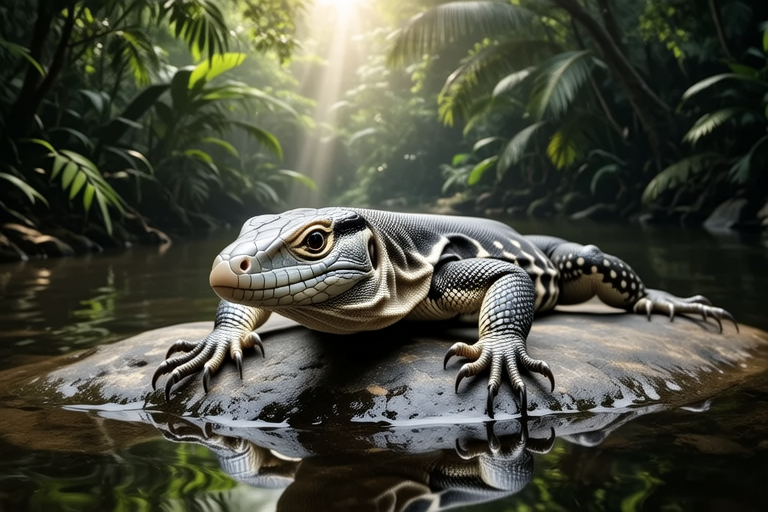
The Majestic Water Monitor: A Comprehensive Care Guide
The water monitor (Varanus salvator) is one of the most impressive reptiles on the planet. Known for its remarkable size, agility, and intelligence, this species has captured the hearts of reptile enthusiasts worldwide. With males reaching lengths of up to 3 meters and females slightly smaller, the water monitor is the second-largest lizard species after the komodo dragon. Their striking appearance, which includes a long tail, sharp claws, and a powerful jaw, makes them a sight to behold. In addition to their physical prowess, water monitors exhibit fascinating behaviors, such as swimming with ease and using their keen senses to locate prey.
Unique Characteristics and Behaviors
Water monitors are highly adaptable creatures, capable of thriving in a variety of environments, from dense forests to coastal regions. They are skilled swimmers and can remain submerged for extended periods, thanks to their ability to close their nostrils and ears. These lizards are also known for their excellent climbing abilities, often seen basking on branches or rocks. Their diet is diverse, consisting of small mammals, birds, insects, fish, and even carrion. Water monitors are intelligent and have been observed using tools, such as sticks, to extract food from tight spaces.
Housing Your Water Monitor
Creating an appropriate habitat for your water monitor is crucial for their well-being. The enclosure should be spacious, allowing the lizard ample room to move around and explore. A minimum size of 6 feet by 4 feet by 4 feet is recommended for juveniles, while adults require enclosures that are at least 8 feet by 5 feet by 5 feet. The enclosure should be equipped with sturdy branches, platforms, and hides for climbing, resting, and hiding. Water monitors are semi-aquatic, so a large water dish is necessary for swimming and soaking. This dish should be deep enough for the lizard to submerge completely and cleaned regularly to maintain hygiene.
Temperature and Humidity Requirements
Maintaining the correct temperature and humidity levels within the enclosure is vital for the health of your water monitor. The ideal temperature range is between 85°F and 95°F (29°C to 35°C) during the day, with a basking spot reaching 100°F to 110°F (38°C to 43°C). At night, temperatures should drop to around 75°F to 85°F (24°C to 29°C). Use a reliable thermometer to monitor these conditions and adjust heating elements as needed. Proper humidity levels are equally important, with the enclosure maintaining a relative humidity of 70% to 80%. Mist the enclosure daily to achieve this level, ensuring that it dries out somewhat between mistings to prevent mold growth.
Dietary Needs
A balanced diet is essential for keeping your water monitor healthy and active. The primary components of their diet include rodents, fish, insects, and occasionally fruits. Juveniles should be fed daily, while adults can be fed every other day. Offer a variety of prey items to ensure a broad spectrum of nutrients. Suitable prey items include mice, rats, feeder fish, crickets, mealworms, and dubia roaches. It’s important to gut-load insects before offering them to your monitor to maximize nutritional value. Occasionally, you can offer small amounts of fruit, such as bananas or papaya, but these should not constitute a significant portion of their diet.
Feeding Schedule
Establishing a consistent feeding schedule is key to your water monitor’s well-being. For young monitors, feed them once a day, providing appropriately sized prey. As they grow, reduce the frequency to every other day. Always remove uneaten prey to prevent potential injury or infection. Overfeeding can lead to obesity, while underfeeding may result in malnutrition. Pay attention to your monitor’s body condition and adjust the quantity of food accordingly. Providing a varied diet helps to prevent picky eating habits and ensures optimal health.
Maintaining a Healthy Environment
To keep your water monitor in top condition, regular maintenance of the enclosure is necessary. Clean the substrate and water dish frequently to eliminate waste and harmful bacteria. Check for signs of illness, such as lethargy, loss of appetite, or unusual skin discoloration. If you notice any concerning symptoms, consult a veterinarian specializing in reptiles. Additionally, provide enrichment activities to stimulate your monitor’s natural behaviors, such as hiding, climbing, and exploring. This can help prevent boredom and promote mental well-being.
Handling and Bonding
Water monitors are generally wary of human interaction, but with patience and consistency, you can establish a bond with your pet. Begin by allowing the monitor to acclimate to its new home before attempting to handle it. When handling, always support the body and avoid grabbing the tail, as this can cause injury. Start with short sessions, gradually increasing the duration as your monitor becomes more comfortable. Reward calm behavior with treats and gentle petting. Remember that each monitor has its own personality, so respect its boundaries and be patient in building trust.
Commitment Required
Owning a water monitor is a significant commitment that requires dedication and resources. These lizards have complex care requirements and can live for 10 to 20 years or more. Ensure you are prepared for the financial and time investment involved in providing proper care. Research thoroughly before bringing a water monitor into your home, and consider joining local reptile groups for support and advice. By understanding the responsibilities associated with owning a water monitor, you can provide a loving and enriching environment for this magnificent creature.
